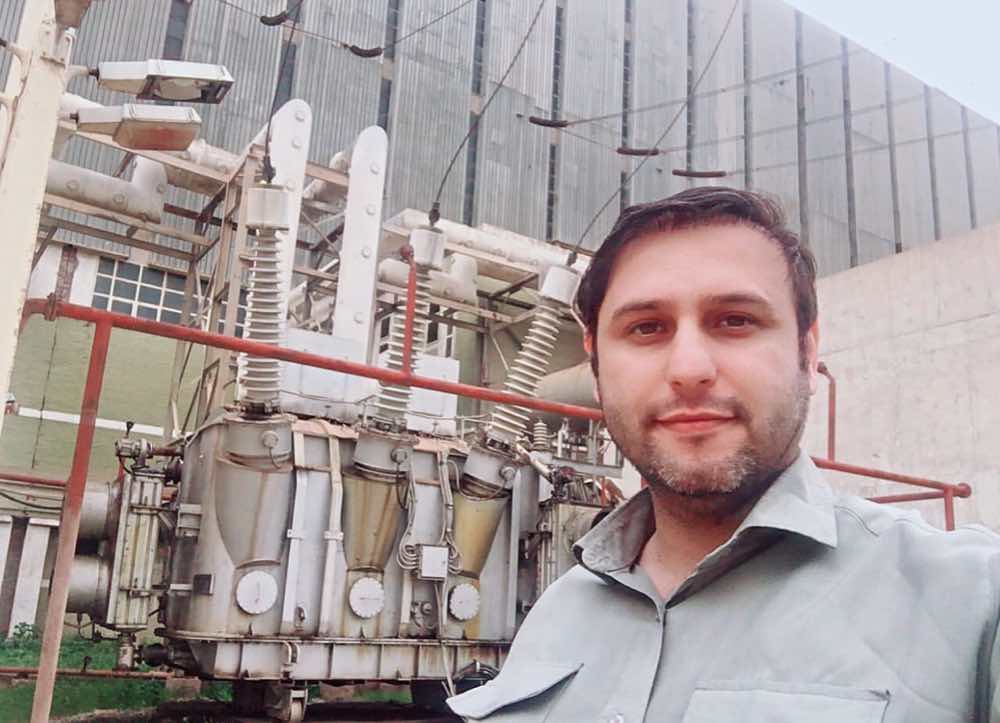
Taylan Demir

Taylan Demir

P.hD Student, Senior Researcher, Scientist & Reviewer in International Journals

Ankara University, Çankaya University, Bu-Ali Sina University, Epoka University, Lebanese American University, Atılım University, Abant Izzet Baysal University

Profile ID RP-003-0242 Joined 2024-12-04 23 articles
0Connections
10
Total Views
23
Total Publications
365
Publication Views

About me

Citations: 23009 h-index: 37 i-10 index: 48 Scientist: Ad-Scientific Index, Scholar GPS, Web of Science, Google Scholar, Researcher ID, Researchersprofile, National h-index, Peer Review \"(17 reviews for 4 publications/grants)\".

Articles(23)

Authors: Shkelqim Hajrulla, Özen Özer, Taylan Demir

DOI: 10.37394/23209.2025.22.9

Volume22
Issue2025
Pages83-92
Abstract

We deal with the development of a seat occupancy detection algorithm for the University’s library utilizing the Faster R-CNN algorithm. The university’s library is widely used by students, particularly during exam season when it can become difficult to find a seat. Going from one building to another is often time-consuming and useless when there are no available seats. This system uses the features of Faster R-CNN in a way to facilitate an automatic seat occupancy monitoring system. Unlike conventional methods of using manual monitoring or weights and occupancy switches as inanimate indicators, it provides real-time seat availability data which allows no human intervention to be a part of the process. Data collection and model training evaluation are considered using annotated datasets with images of library seating layouts. The Faster R-CNN model is trained such that it can accurately detect vacancy or occupancy at library seats. This work takes a futuristic approach towards smart library management systems, in which user needs are changing, and considers the use of high-end computer vision technologies to be integrated into all such libraries. The proposed system aims to leverage the effectiveness of Faster R-CNN and go a long way in redefining seat occupancy management for university libraries by enabling better efficiency, resource utilization, as well as user satisfaction in prospect.

Authors: Shkelqim Hajrulla, Arban Uka, Taylan Demir

DOI: 10.33422/ejest.v6i1.986

Volume6
Issue1
Pages1-9
Abstract

In many studies of the heat transfer problems, many scientifics have studied the heat transfer problems by solving partial differential equations without any use of approximations or finding the solutions with experimental data. In this paper, we analyze the heat transfer problem using a heat source in a closed environment and how it transfers in the neighboring sections. We refer to mathematical concept to make possible the simplification of the complexity that associates such thermodynamic problems. We will discuss such a problem as a discrete one, easily computable, rather than treating it as a continuous one. We have reduced this problem into solving a simple system of linear equations and differential equations. In many cases differential equations are hard and difficult to solve. So, we use numerical methods to approximate the differential equations to algebraic equations and solve them. We will compare different algorithms used and show which one of them performs better under our test conditions. The program will simulate the heat transfer of a single heat source in a closed environment. The results of the simulations will be presented in graphs and demonstrated in visual settings. In the end, we will provide our conclusions on the performance of the numerical methods. We achieve the purpose of this study, which is to analyze the heat generation analysis and heat transport in three-dimensional space as to the neighboring sides of a closed environment.

Authors: Shkelqim Hajrulla, Arban Uka, Loubna Ali, Taylan Demir

DOI: 10.33422/icarste.v1i1.14

Volume1
Issue1
Pages21-31
Abstract

In many studies of heat transfer problems, many researchers have studied heat transfer problems by solving partial differential equations without using approximations or finding solutions with experimental data. This paper analyzes the heat transfer problem using a heat source in a closed environment and how it transfers in the neighboring sections. Referring to mathematical concepts, this work makes possible the simplification of the complexity that associates with such thermodynamic problems. In this framework, the research group discusses such a problem as a discrete one, easily computable, rather than treating it as a continuous one. The reduction of this problem to the solution of a simple system of linear equations and differential equations gives us the possibility to obtain the desired results regarding heat distribution. In many cases, differential equations are hard and difficult to solve. So, we deal with numerical methods to approximate the differential equations to algebraic equations and solve them. Comparing the different algorithms used and showing which of them works best in our testing conditions gives us the possibility of testing and comparing the results and the proper performance. The program will simulate the heat transfer of a single heat source in a closed environment. The results of the simulations will be presented in graphs and demonstrated in visual settings. In the end, our research will provide conclusions on the performance of the numerical methods. The purpose of this article is to study and analyze heat generation and heat transport in three-dimensional space with respect to neighboring sides of a closed environment.

Authors: Shkelqim HAJRULLA, Taylan DEMİR, Loubna ALİ, Nour SOULİMAN

DOI: 10.31590/ejosat.1256040

Volume7
Issue47
Pages67-72
Abstract

Based on math operations, we can do some analytic approaches for the energy saving for the WSN life. We will study the vacation period time using numerical methods for studding the energy saving mechanism in analytic models. Several research papers have reported that the normal distribution of a random variable has an enormous contribution in analyzing and comparing the data with each other, making the process easier according to methods used or observing the tendencies of numerous occurrences in life applications. This paper focuses on analyzing two problems: the first one is the normal distribution and its special cases by solving real problems of WSN node operations and the second one is the application of standard normal distribution relate to saving energy during vacation time in a certain time interval. The goal of our work is to obtain the appropriate algorithm to minimize the risk of data loss during the network vacation period, which is associated with the organization of network node structures after this period time, and to maximize the battery life of individual sensors. For that, we will use math methods and based on probability distribution theory, we derive some distributions of the processing period duration from an arbitrary fixed time up to a variable time t. The analytic approach based on the conception of Laplace transform and the Lagrange method performs better than the previous results. We continue by examining them through detailed calculations and graphs. We compare the predicted energy saving and the average real energy.

Authors: Taylan Demir, Shkelqim Hajrulla

DOI: 10.59287/as-ijanser.631

Volume7
Issue11
Pages289-294
Abstract

In this part, the basic definitions of fractional derivative and fractional integral were explained by us. Later, some of their applications were mentioned with these operators on discrete time. Especially, I recalled the modified discrete fractional operators with Mittag-Leffler kernel which was recently introduced. I presented the solutions of some linear discrete fractional order differential equations. Finally, some examples was given to confirm the importance from modelling point of view of the modified discrete fractional operators possessing Mittag-Leffler kernel.

Authors: Taylan Demir, Shkelqim Hajrulla, Leonard Bezati, Desantila Hajrulla

DOI: 10.59287/as-ijanser.632

Volume7
Issue11
Pages295-300
Abstract

There are practices on application and optimisation problems. We deal with some mathematical results, comparisons, optimisations and conclusions upon different structures. The results show that each method has its strengths and weaknesses depending on the nature of the equation and the initial guess. The bisection method is the most robust and guarantees convergence, but it is also the slowest. Newton's method is the fastest and converges quadratically near the root, but it may fail for certain types of equations. The secant method is a compromise between speed and robustness, but it may suffer from slow convergence or oscillations. This article also discusses the sources of errors and limitations of the methods, as well as the applications of these methods in real-world problems. Moreover, we will deal with their application in engineering field mostly in civil engineering field as they have a wide application there and are also very useful methods. For instance we will use numerical methods to design hydraulic structures. Numerical methods are techniques by which the mathematical problems involved with the engineering analysis cannot readily or possibly be solved by analytical methods. the simplex algorithm are used to find optimal solutions to these problems. These methods involve iterative procedures that converge to the optimal solution.Approximation methods are used to simplify complex functions or data sets.

Authors: Shkelqim Hajrulla, Taylan Demir, Leonard Bezati, Robert Kosova, Desantila Hajrulla

DOI: 10.59287/as-ijanser.623

Volume7
Issue11
Pages244-250
Abstract

This paper considers knowledge of unimodular matrixes, some compound structural matrix, and their applications. Studying the properties of unimodular matrixes and extending compound structures related to this set of matrixes we give some results. The inverse of an unimodular matrix and the product of two unimodular matrices is also uni-modular. We are generating a finite system of linear equations via a uni-modular matrix with Latex and Python programs. According to the previous results of the transformation theory of the unimodular matrix, we use basic properties such as unimodular, orthogonality, and symmetry. A comparison between the results is mentioned in this article to obtaingeneral conclusions.We deal with the considered results comparing the obtained solutions with the exact ones. We give in particular the numerical results compared with the analytical results using the natural exponential matrix function of real variables and the unimodular matrix can be solved efficiently. Another problem arises if the entries of the inverse matrix are not integers, so it will take longer if done by hand manually. We are sure that their applications are very important. We propose their applications to construct the algebraic structures. In conclusion, mathematically we analyze the exponential function of an unimodular matrix. We describe the symmetry of space which gives accurate results.

Authors: Shkelqim Hajrulla, Taylan Demir, Leonard Bezati, Robert Kosova

DOI: 10.59287/as-proceedings.23

Volume1
Issue1
Pages57-64
Abstract

In this article, we deal with some applied teaching methods in education. Using numerical methods in some articles, our research raises the question and gives the answer to why a constructive learning method has been applied to the teaching of numerical methods. Together with some practical aspects of implementing this approach, our article gives the ways to how constructive mathematics helps on models applied for an undergraduate course in numerical methods. Teaching both the mathematical theory of numerical analysis and the skill of implementing numerical algorithms is a great deal and a big challenge for applied studies. Problems concerned with an iterative method and some practical solutions are used for getting good results. What is discussed here is why a constructive learning method has been applied to the teaching of numerical methods, together with some practical aspects of implementing this approach. Statistical data and results are applied.

Authors: Shkelqim Hajrulla, Taylan Demir, Vasil Lino, Loubna Ali

DOI: 10.59287/as-ijanser.4

Volume7
Issue10
Pages18-25
Abstract

We deal with the normal distribution as an overview of real-life problems. Our paper focuses on analyzing the normal distribution and its special cases by solving real-life problems and examining them through detailed calculations and graphs. Several research papers have reported that the normal distribution of a random variable has an enormous contribution in analyzing and comparing the data with each other, making the process easier for other methods in real-life applications. Using numerical methods, we get the approximations and the error during the different cases. In this research paper, we will discuss how the Euler equation will be used to solve the same problem in a more efficient way. The Euler method is used during the approximation process and with some widely studied models, including the standard formulas for each method, simulations, and graphs.

Authors: Shkelqim Hajrulla, Arban Uka, Taylan Demir, Fatmir Hoxha, Desantila Hajrulla

DOI: 10.20852/ntmsci.2022.459

Volume10
Issue1
Pages025-031
Abstract

The matrix method used in many studies of wave theory, for easy calculations, is described and used in the shallow water breaking theory. We deal with shallow water wave breaking and the method of unimodular matrix. Introducing a class of nonlinear water waves, the solution in the stratification regions using matrix method through unimodularity is given. In this paper we present the stratification approximated by n-layers. Our method firstly involves a 2x2 matrix. Taking the production of n 2x2 matrices we choose the layers with linear variation. The main part of our work covers the fact that energy conservation law is satisfied. For this the unimodularity of the matrices is used. The models are tested against experiments concerning periodic wave transformation. The density and the speed of waves vary exponentially with depth. We conclude with experiments and some important conclusions.

Authors: Taylan Demir, Shkelqim Hajrulla, Pınar Doğan

DOI: 10.13140/RG.2.2.18969.08807

Volume1
Issue1
Pages1-7
Abstract

In this thesis, we will define harmonic waves, linear wave equation on physical problem. [1,2] Initially, we will interrupt physical meaning of harmonic waves on time dependent and we will mention that physical interpretation of linear wave equation with calculating.[1,2] After that, we will use many definitions of fractional derivative in order to need to apply on harmonic and linear waves equation.[3,4] Therefore, definitions of fractional-order derivative will mentioned in our thesis after interrupting harmonic waves and linear wave equation.

Authors: Taylan Demir, Shkelqim Hajrulla, Pınar Doğan

DOI: 10.13140/RG.2.2.20306.02247

Volume1
Issue1
Pages1-17
Abstract

Our this thesis; initially, we define special functions on fractional calculus because, gamma function[1,3,4,7], beta function [2,6], Integral function [5], Mittag-Leffler and Integration of the Mittag-Leffler function [3] are related with fractional derivatives and fractional Integrals[7]. Also, matlab, which is used on applied Mathematics field mostly, is applied on our thesis to interrupt special functions curves and to show fractional order derivative equation graphics. Owing to using definition of the special function, fractional derivative and fractional integral[7], we understand theoretic definition more easily.

Authors: Taylan Demir

DOI: 10.13140/RG.2.2.16633.54882

Volume1
Issue1
Pages1
Abstract

In this section, initially, I mention that definition of the Laplace transform. After that, calculus of the images [1], Laplace Transforms of the Riemann-Liouville Fractional derivative, Caputo derivative, Grünwald-Letnikov and Miller-Ross Sequential Fractional derivatives [2] are mentioned in our thesis. Since, this definitions have many application fields such as; engineering modelling, control systems and many physical problems. Keywords: Fractional-order Laplace transform, Riemann-Liouville definitions, Caputo definitions, Grünwald-Letnikov and Miller-Ross definitions.

Authors: Taylan Demir

DOI: 10.13140/RG.2.2.26612.01927

Volume1
Issue1
Pages1
Abstract

In this article, I applied many definitions of fractional calculus on physical problems. First of all, I did modelling with diffusion equations and wave equations. Especially, description of transfer proccesses in fractals I. Podlubny [1], B.Mandelbrot [2], A. Le Mehaute, A. de Guibert, M. Delaye and Ch. Filippi [3] was used and suggested of equation in [3] was applied on one-dimension. Second of all, I used generalization of the fractional partial differential equation recommended by K. B. Oldham and J. Spanier with Fick's Law [4]-[5]. Third of all, I metioned that [6]-[7]-[8]-[9]-[10] and [11] to apply on diffusion and wave equations. Finally, I used Matlab on (Sh. Hajrulla, A. Uka, T. Demir, F. Hoxha, D. Hajrulla, L. Bezati [12]) to describe of shallow water wave equations. In briefly, the reason why I was writing this thesis was correlate and did mathematical modelling of definitions of fractional-order differential equations on diffusion and wave equations with respect to time-domain.

Authors: Taylan Demir, Güney Erikçi

DOI: 10.13140/RG.2.2.27638.47685

Volume1
Issue1
Pages1-19
Abstract

In this article, initially, we will mention that Grünwald-Letnikov, Riemann-Liouville and Caputo fractional derivatives definitions. After that, we will use this definition on generalised functions. Also, after we apply this on generalised functions, we will use Matlab program to apply on physical modelling.

Authors: Taylan Demir, Güney Erikçi

DOI: 10.13140/RG.2.2.12040.90884

Volume1
Issue1
Pages1
Abstract

nitially, we define the Laplace transforms in this paper. Secondly, Laplace transform of the Riemann-Liouville, Grunwald-Letnikov and Caputo fractional derivatives are given to apply physical problem [1, pp. 103-108]-[2]-[3]-[4]-[5]. After, we define these, we get result from control systems. Particularly, matlab is used to display fractional differentiations on graphics.

Authors: Taylan Demir, Shkelqim Hajrulla

DOI: 10.13140/RG.2.2.11671.85926

Volume1
Issue1
Pages1
Abstract

In this article, initially we will introduce fractional-order Fourier Transformation and we will mention that its application field. Especially, fractional order Fourier Transformation are applied on control systems, dynamic modelling, signal and image processing but only we will mention that its application on Signal Processing. Finally, matlab program will used to solutions of numerical methods on fractional Fourier transformation on signal processing from time domain to frequence domain.

Authors: Taylan Demir

DOI: 10.13140/RG.2.2.22740.58242

Volume1
Issue1
Pages1-2
Abstract

In this research, we will mention about types of waves such as; p-waves, s-waves, rayleigh waves, water waves, shallow water waves. Later, wave equation will be shown in 1-dimension, 2-dimension and it will be concerned with D'Alembert's method to solve many types of wave equations. In our research, some types of waves will be modelled with Matlab to show.

Authors: Taylan Demir

DOI: 10.13140/RG.2.2.19700.67204

Volume1
Issue1
Pages1-2
Abstract

This presentation delves into the integration of topological methods within control theory, emphasizing their crucial role in enhancing the stability and robustness of control systems. It begins by introducing the foundational principles that connect topology to control theory. The focus then shifts to examining Proportional-Integral-Derivative (PID) controllers through a topological lens, showcasing how these methods can improve stability assessments. Additionally, the talk explores the application of topological tools in dynamic system control, addressing key topics such as stability, chaos, and bifurcation analysis. A practical example involving robotic motion planning illustrates the effectiveness of topological models in navigating complex, obstacle-laden environments. The session concludes with a review of recent advancements in this interdisciplinary field, highlighting unresolved challenges and suggesting promising directions for future research.

Authors: Taylan Demir

DOI: 10.13140/rg.2.2.21984.25609

Volume1
Issue1
Pages1-41
Abstract

In this study, initially definitions of fractional differential operators were given [1]-[2]. Later, difference equations were mentioned [3]. Particularly , difference operators, first-order linear difference equations and solving linear equations were explained [3]. In as much as; we usually used fractional operators in this part. After, by researching fractional order difference equations, we used Riemann-Liouville and Caputo definitions on fractional difference equations [1]-[2]-[3]. Final part, fractional order systems were mentioned and Caputo type fractional operators were modelled with linear, nonlinear, Cornu, Lorenz, Chen-type systems and heat transfer systems [1]-[2]-[3]-[4]-[5]. Results of these applications, some successive approximations were obtained on both linear and nonlinear systems [1]-[2]-[3]-[4].Finally, we used Laplace transformation on linear and nonlinear systems to analyze these systems on frequence domain [2]-[4].

Authors: Taylan Demir

DOI: 10.13140/RG.2.2.20608.00000

Volume1
Issue1
Pages1-10
Abstract

In this part, definitions of q-differential operators were introduced [1]. Later, q-difference operators were given in this section [1]-[2]. After that, Nabla versions of the difference operators were defined on timescale so some basic properties of Nabla operators were used because, (p,q)-analogues of the Sumudu transforms were shown with q-Nabla difference operators [3].

Authors: Shkelqim Hajrulla, Taylan Demir

DOI: 10.13140/rg.2.2.15750.70722

Volume1
Issue1
Pages1-4
Abstract

In this part, we will mention that one dimensional wave equation with D'Alembert's solution.Especially, this method has many application fields such as; vibrations of sound wave,elastic waves, seismic wave and water waves but only we interested in one dimensional wave solutions.Previously, sound wave, elastic waves, seismic wave and water waves will have been given their definitions and formulations after, D'Alembert solution will be mentioned with the one dimensional wave equations.

No matching articles

Try another word from the title, author or DOI.

Brief Bio

Citations: 23009 h-index: 37 i-10 index: 48 Scientist: Ad-Scientific Index, Scholar GPS, Web of Science, Google Scholar, Researcher ID, Researchersprofile, National h-index, Peer Review \"(17 reviews for 4 publications/grants)\".

Affiliations

Nothing added yet.

Education

Nothing added yet.

Honors & Awards

Nothing added yet.

Society Memberships

Nothing added yet.

Expertise

Nothing added yet.

Specialty

Nothing added yet.

Suggested researchers

Madhur Gupta
NKP Salve Institute of Medical Sciences & Research Centre and Lata Mangeshkar Hospital, Nagpur, Maharashtra, India
105 publications
GG
Gaurav Gupta
Jaipur Dental College, Jaipur, Rajasthan, India
17 publications
VR
V Rama Raju
Jawaharlal Nehru Technological University, Hyderabad, India, Telangana
15 publications
MB
Mykhailo Buzynnyi
State Institution "O.M.Marzieiev Institute of public health NAMS of Ukraine"
40 publications
CMA(Dr.) Ashok Panigrahi
NMIMS University, Shirpur.
22 publications
HA
Himanshu Aeran
Seema Dental College and Hospital, Rishikesh, Uttarakhand, India
17 publications
HA
Himanshu Aeran
Seema Dental College and Hospital, Rishikesh, Uttarakhand, India
18 publications
DM
Dr.S. Manickam
PSP Medical College Hospital and Research Institute
24 publications
SC
Sunil Chaudhry
40 publications
Mohammadreza Ghodsi
Phd
23 publications
RS
RASHMI SAINI
GARGI COLLEGE, UNIVERSITY OF DELHI, DELHI
17 publications

Following

Nobody here yet.

Followers

Nobody here yet.

23 Publications