
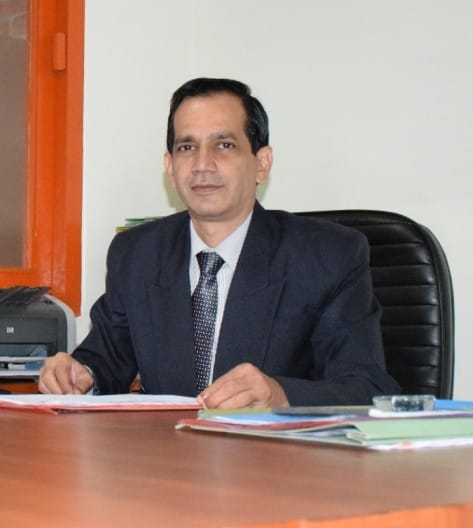
Tiplut wann

Tiplut wann

Profile ID RP-004-2875 Joined 2026-09-14 5 articles
0Connections
6
Total Views
5
Total Publications
161
Publication Views

Articles(5)

Authors: Rikmenlang Syiem, Jiarlimon Khongtim, Rudolf Carey Chyne, Tiplut Wann

DOI: 10.1515/opis-2025-0046

Volume10
Issue1
Pages1-19
Abstract

Abstract This study aimed to assess the levels and key determinants of digital literacy skills among Eri silk farmers in Ri Bhoi District of Meghalaya. Purposive sampling was used to select three villages known for high concentrations of Eri silk farming in the district. Out of the 181 total number of Eri silk farmers present in all the three villages, only 150 (∼83 %) of them are willing to participate in the study. Structured interview schedule was deemed more appropriate than a self-administered questionnaire due to varying levels of literacy among the respondents. The findings of the study revealed three distinct digital user groups; Basic Operators, Social Users, and Emerging Navigators; highlighting substantial variation in digital capability within the community. Bayesian network analysis showed that digital training, age, and market exposure significantly increased farmers’ ability to recognise their agricultural information needs. Structural Equation Modelling (SEM) demonstrated that digital literacy strongly predicted online information-seeking behaviour ( β  = 0.67, p  < 0.001), whereas social capital exerted an even stronger influence on reliance on local, non-digital information networks ( β  = 0.82, p  < 0.001), illustrating the coexistence of traditional and digital pathways of learning. Additional machine-learning results identified file organization skills and digital literacy as key determinants of effective digital information management. Overall, the findings underscore that while digital tools offer new opportunities for knowledge access, community-based trust networks continue to play a central role in shaping farmers’ information ecosystems.
Authors: Tiplut Wann, Jiarlimon Khongtim, Thuanthailiu Gonmei

DOI: 10.1515/opis-2025-0027

Volume9
Issue1
Pages1-21
Abstract

Abstract Misinformation about agricultural government schemes often impedes farmers from fully utilizing available initiatives. This study examines the role of information literacy in mitigating misinformation and enhancing farmers’ access to government support. The study employed a mixed-methods approach with a simple random sampling technique to select 200 farmers from four villages in West Jaintia Hills, Meghalaya. Data collection included surveys, interviews, and focus group discussions to assess information literacy and misinformation’s impact on trust. The findings reveal that while most farmers are aware of agricultural schemes, they predominantly rely on informal sources such as peers and family, with 36.5% citing them as their primary source, highlighting the role of social networks in information dissemination. The key challenges include low digital literacy, limited access to verified sources, and social influences affecting information trust. Statistical analysis indicates negligible correlations between education or experience and information literacy, though strong correlations exist among literacy skills. The study also contributes original insights into the relationship between information literacy and misinformation, emphasizing the need for targeted literacy training, improved government communication, and community-driven interventions to enhance farmers’ decision-making and participation in agricultural schemes.

Authors: Tiplut Wann, Jiarlimon Khongtim

DOI: 10.1108/gkmc-10-2023-0406

Volume75
Issue-10
Pages2111-2129
Abstract

Purpose The aim of this study is to examine the availability, utilization and effectiveness of various information sources in enhancing the knowledge and practices of Lakadong turmeric farmers. Design/methodology/approach This study focuses on 125 Lakadong turmeric farmers in Myntkung and Biar villages, Meghalaya, India. A purposive sampling technique was used to select participants, ensuring the representation of various ages, experiences and agricultural practices. A mixed-methods approach was used, including structured interviews and focus group discussions, to gather information on the farmers. Findings The study found that most of the Lakadong turmeric farmers (35.2%) needed information on farming techniques and practices and 93.6% of farmers approached their friends, relatives or fellow farmers to access any information. For most farmers, 77 (62%) relied on word-of-mouth to get information. After using the information effectively and efficiently, most farmers (46.4%) agreed that there was an increase in Lakadong turmeric yields, improved crop quality and reduced pest infestation. Research limitations/implications The study highlights informational gaps in the agricultural sector, empowering farmers to explore alternative sources. It suggests that understanding farmers’ unique needs can improve agricultural extension agencies’ programs and resources. Policymakers should invest in digital literacy programs and regional information resources. The study also suggests integrating information literacy training into agricultural operations, fostering collaboration among farmers, institutions and information providers. The geographical indication tag on Lakadong turmeric can also empowers local communities by fostering economic opportunities through the promotion and protection of this prized spice. Originality/value Existing research tends to focus more broadly on agricultural information dissemination or other crops, leaving a notable gap in the literature regarding the unique informational needs and access challenges faced by Lakadong turmeric farmers.

Authors: Tiplut Wann, Jiarlimon Khongtim, Rudolf Carey Chyne

DOI: 10.1177/03400352241261730

Volume50
Issue3
Pages463-478
Abstract

This article investigates the link between information literacy and farmers’ decision-making processes, highlighting the potential for improving information literacy to promote sustainable agricultural practices. This study employed a mixed-methods approach – that is, qualitative and quantitative data collection techniques. It was found that gender did not significantly influence the reported skills and behaviours. However, the use of digital technologies showed a significant positive correlation with seeking information on new agricultural practices ( r = .254, p < .01). This shows that proficient users of digital tools are more likely to seek new agricultural information actively. This research emphasizes the importance of collaboration and knowledge-sharing among farmers and stakeholders to effectively use agricultural information in decision-making, with implications for academic research and practical agricultural interventions.

Authors: Rudolf Carey Chyne, Jiarlimon Khongtim, Tiplut Wann

DOI: 10.1016/j.acalib.2023.102771

Volume49
Issue5
Pages102771
Abstract

Elsevier logo LeapSpace Journals & Books Help Search My account Sign in North-Eastern Hill University is subscribed to this content Sign in to access it. The Journal of Academic Librarianship The Journal of Academic Librarianship Date: September 2023 Article: 102771 Volume: Volume 49, Issue 5 View accessibility information Published by Elsevier Research article Get rights and content Evaluation of social media information among college students: An information literacy approach using CCOW Rudolf Carey Chyne , Jiarlimon Khongtim , Tiplut Wann Show more Cite Add to Mendeley Share 10.1016/j.acalib.2023.102771 Purchase PDF Access through another organization Article preview Recommended articles Cited by (7) Article preview Abstract Introduction Section snippets References (78) Abstract Social media platforms have become increasingly important as sources of information in higher education. However, assessing the quality of information on these platforms posed a challenge due to wide variability in reliability. This study aimed to explore the impact of the CCOW (Credentials, Claims, Objectives, Worldview) approach on college students' evaluation of social media information. Participants were provided with a CCOW information literacy guide, which served as a manual for analyzing social media data. Prior to the intervention, students completed a pre-test assignment to assess their proficiency in evaluating social media material without the CCOW Guide. Subsequently, a post-test assignment was administered after the intervention, utilizing the CCOW guide to evaluate material from social media. The primary goal of the study was to determine the effect of the CCOW approach on students' evaluation skills. The findings highlighted significant differences in the evaluation of social media information following the implementation of the CCOW information literacy approach.

No matching articles

Try another word from the title, author or DOI.

Brief Bio

No bio added yet.

Affiliations

Nothing added yet.

Education

Nothing added yet.

Honors & Awards

Nothing added yet.

Society Memberships

Nothing added yet.

Expertise

Nothing added yet.

Specialty

Nothing added yet.

Other Online Pages

Scholars in the same field

SD
Shivani Datta
0 publications
IH
Imtiyaz Hussain
0 publications
NA
Nirali Alaiya
0 publications
VS
Vinny Sharma
0 publications
SJ
Dr Shreya jain
0 publications
AK
Dr Anil Kumar Dwivedi
Veer Chandra Singh Garhwali Government Institute of Medical Science and Research, Srinagar Garhwal Uttarakhand, India
0 publications
SG
Shiny George
0 publications
YS
yatakona supriya
0 publications
LT
LIKHITHA T G
0 publications
Dr Sameer Dileep Joshi
LNBCIEM Satara Maharashtra
0 publications

Following

Nobody here yet.

Followers

Nobody here yet.

5 Publications