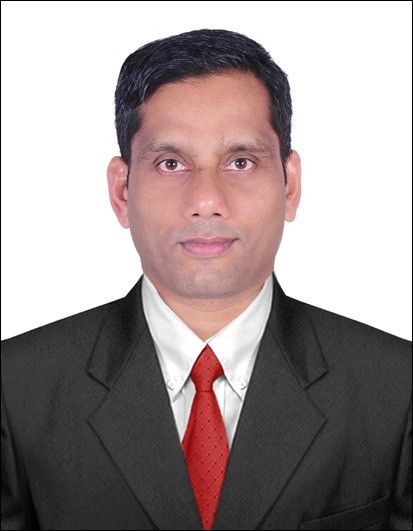
RABINARAYAN PANDA

RABINARAYAN PANDA

Associate professor

GARDEN CITY UNIVERSITY

Profile ID RP-004-2113 Joined 2026-08-07 4 articles
0Connections
8
Total Views
4
Total Publications
119
Publication Views

About me

I have With 17 years of experience in teaching and research across India and abroad, I am currently working as an Associate Professor in the Department of Computer Science and Engineering at Garden City University, Bangalore. I completed my MTech in Computer Science and Engineering from Berhampur University and earned my Ph.D. from GIET University, Odisha. Currently I am Perusing Post Doc in Lincoln University, Malaysia. My academic and research background includes 20 international journal publications, 9 patents, and 10 international conference papers. My research interests focus on Image Processing, Pattern Recognition, and Natural Language Processing, along with strong expertise in Artificial Intelligence, Machine Learning, and Cloud technologies. I am an active member of IEEE and I2OR India, reflecting my commitment to continuous professional development and academic.

Articles(4)

Authors: Bishnu Paramguru Mahapatra, Rabinarayan Panda, Roni Das, Rajeswari M, Sachikanta Dash

DOI: 10.51483/ijaiml.6.1s.2026.276-291

Volume6
Issue1
Pages276-291
Abstract

The primary aim of this study is to evaluate the effectiveness of Game-Based Learning (GBL) in improving students' academic achievement and motivation in school education. The study aims to investigate how motivational elements affect academic results while assessing whether different grade levels show different levels of GBL effectiveness.

Authors: S. Gopal Krishna Patro, Rabinarayan Panda, Saptaparni Chatterjee, Jnanaranjan Mohanty, Satrujit Mishra, Khayala Mammadova, Mekhrbonu Rakhimova, Maytham T. Qasim, Mohammad Khishe

DOI: 10.1016/j.ibmed.2026.100423

Volume15
Issue1
Pages100423
Abstract

Alzheimer disease is a progressive neurodegenerative disease which primarily impairs the memory, cognitive abilities as well as behavioral functions. It is the leading cause of dementia and an important health issue in the world with the rising population of the elderly. The early diagnosis of the Alzheimer disease is essential to slow down the development of the disease and secure better outcome in patients though the traditional diagnostic systems tend to reveal the disease when it has already led to serious loss of neurons. The recent breakthroughs in the biomedical field and computer technologies have allowed creating data-driven methods of early diagnosis and disease monitoring. Specifically, artificial intelligence methods have shown to have an exceptional potential in the analysis of complex biomedical data, such as neuroimaging scans, biomarker measurements and clinical records. This work is a detailed analytical structure of research on the problem of Alzheimer disease based on artificial intelligence and multimodal biomedical data. The research incorporates the neuroimaging data, biochemical biomarkers as well as clinical parameters to create predictive models with which one can detect the early pathological alterations that relate to the disease. The machine learning and AI algorithms are used to process structural magnetic resonance imaging data and biomarker characteristics using large-scale research datasets. Mathematical modelling and statistical evaluation method is also included in the proposed framework to determine the classification performance and diagnostic reliability. As per experimental analysis, AI-based methods can substantially improve the diagnostic accuracy and allow obtaining an earlier diagnosis than the traditional ones. The results of this study bring out the possibility of the use of artificial intelligence technology and biomedical data analysis to assist clinicians in decision-making and to enhance the treatment of neurodegenerative diseases.

Authors: Pratap Kumar Dakua, Sagar Bhattarai, Nimisha Borah, Lachit Dutta, Abhinav Kumar, Ankit Sharma, Rabinarayan Panda, Bhaben Tanti

DOI: 10.1016/j.jpcs.2026.113630

Volume214
Issue1
Pages113630
Abstract

Ruddlesden-Popper (RP) two-dimensional (2D) perovskites, however, are commonly employed as passivation layers or interfacial overlayers over 3D perovskite layers to simultaneously improve efficiency and introduce environmental stability in (Perovskite Solar Cells) PSCs under high temperatures. Conventional solution-based deposition methods also preferentially produce non-uniform 2D phases or extremely thin layers, which limit the overall efficacy of passivation. In this paper, optimized hierarchical 3D/2D perovskites are built using a Cesium germanium di-iodide dibromide, a Ruddlesden-Popper (2D) film, and (Cs0.07FA0.85MA0.08Pb(IBr)3, a 3D triple-cation. Utilizing SCAPS-1D simulations, an initial 3D perovskite absorber achieved a PCE of 29.84%. Optimization led to a maximum PCE of 30.17%, Voc of (1.3475 V), Jsc of (26.65 mA/cm2), and FF of (84.02%). This performance was attained using a 1 μm bilayer composition of Cs2GeI2Br2 and 0.25 μm Cs0.07FA0.85MA0.08Pb(IBr)3, which exhibited improved light absorption and carrier extraction than single-layer designs.

Authors: Pratap Kumar Dakua, Rohit Vikram Singh Bhadauria, Dontabhaktuni Jayakumar, Rabinarayan Panda, Sukanta Kumar Swain, Vullanki Rajesh, Suman Maloji, Siddharth Kumar

DOI: 10.1038/s41598-026-37248-w

Volume16
Issue1
Pages14618
Abstract

This paper deals with the numerical performance evaluation of solar cells based on ZnMgO/CZTS with and without a back-surface field (BSF) layer. ZnMgO is used as a buffer layer due to its non-toxicity and strain-balancing properties at i-ZnO/ZnMgO and ZnMgO/CZTS interfaces. A multilayer structure of ZnO: Al/i-ZnO/ZnMgO/CZTS is considered for the initial analysis. Subsequently, a BSF layer of CZTS material with different optical and electronic properties, called CZTS2, is inserted between the back-contact layer and the existing CZTS layer, called CZTS1, to form a new structure as ZnO: Al/i- ZnO/ZnMgO/CZTS1/CZTS2 to enhance the performance. The performance of the structure with and without the BSF layer was evaluated in terms of various layer parameters such as thickness, band gap, carrier concentration, defect densities, and work function. Then, the effects of operating temperature and the combination of shunt and series resistance on the overall performance were investigated. The simulated results were calibrated with existing experimental data from the literature to validate the work. In the optimized structure with the BSF layer, a maximum efficiency of 23.67% is achieved, which is 4% higher than that of without the BSF layer. The generation and recombination rates of the structures with and without the BSF layer were investigated to understand the reason for the improved efficiency. The results of this work are very promising for the development of high-efficiency, low-cost, and non-toxic CZTS solar cells.

No matching articles

Try another word from the title, author or DOI.

Brief Bio

I have With 17 years of experience in teaching and research across India and abroad, I am currently working as an Associate Professor in the Department of Computer Science and Engineering at Garden City University, Bangalore. I completed my MTech in Computer Science and Engineering from Berhampur University and earned my Ph.D. from GIET University, Odisha. Currently I am Perusing Post Doc in Lincoln University, Malaysia. My academic and research background includes 20 international journal publications, 9 patents, and 10 international conference papers. My research interests focus on Image Processing, Pattern Recognition, and Natural Language Processing, along with strong expertise in Artificial Intelligence, Machine Learning, and Cloud technologies. I am an active member of IEEE and I2OR India, reflecting my commitment to continuous professional development and academic.

Affiliations

Nothing added yet.

Education

Nothing added yet.

Honors & Awards

Nothing added yet.

Society Memberships

Nothing added yet.

Expertise

Nothing added yet.

Specialty

Nothing added yet.

Other Online Pages

Scholars in the same field

AV
Arulmozhi Vetrivel
0 publications
SD
Shivani Datta
0 publications
SN
Shikha Naagar
0 publications
RP
Rakesh Pandit
0 publications
SP
Sambunki Pakem
0 publications
NB
Nirjan Biswas
0 publications
SS
Satyaprakash Suman
0 publications
J
jgjgg
adada
0 publications

Following

Nobody here yet.

Followers

Nobody here yet.

4 Publications