
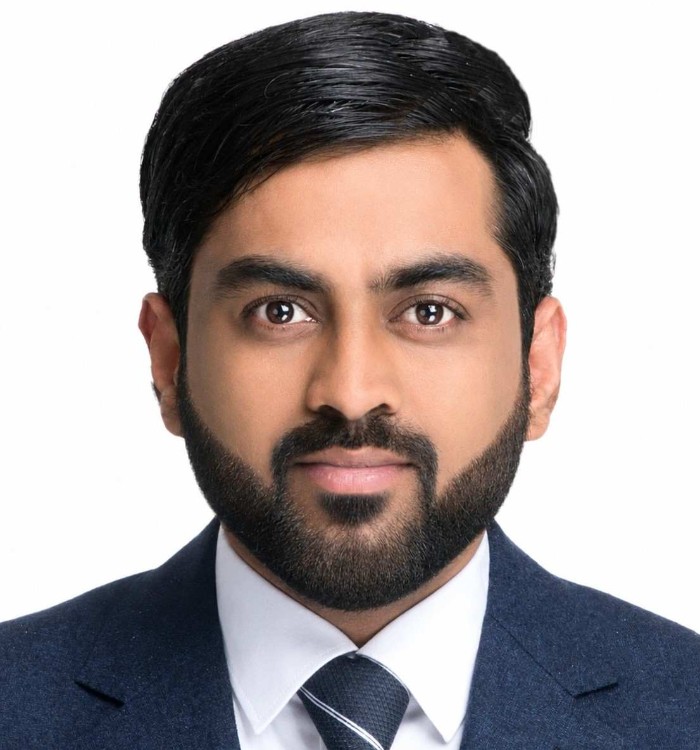
Dr. Muhammad Jamil

Dr. Muhammad Jamil

Lecturer

Government College Women University Sialkot

Profile ID RP-004-0726 Joined 2026-06-06 3 articles
0Connections
8
Total Views
3
Total Publications
90
Publication Views

Articles(3)

Authors: Shireen Razzaq, Maryam Baig, Dr. Muhammad Jamil

DOI: 10.59075/jssa.v4i1.605

Volume4
Issue1
Pages1700-1709
Abstract

The educational system is transforming in important ways, due to advances in technology, and a different view regarding what educators should do in the classroom. It calls for a thorough investigation of the pedagogy and training of teachers with the skills they acquire to face the challenges of the 21st Century. This was a qualitative study with a phenomenological research design, which was conducted to explore 'how teachers experience the profession' while engaged in teacher preparation during periods of rapid change in education. 9 participants were selected through purposive sampling from onc center of the Quaid-e-Azam Academy for Educational Development (QAED), Punjab, Pakistan. Data were collected through self-developed semi-structured interview guide and analyzed by reflexive thematic analysis. Three major themes emerged: technological integration in teacher training, need for social-emotional learning (SEL) in teacher training, and limited opportunities for teacher professional learning. The reflective experiences of the participants revealed significant difficulties relevant to the effective use of technology: difficulties in accessing digital infrastructure, limited resources around materials and preserve a teacher-centered curricular orientation. Further, flexibility, sympathy, and a desire for life-long learning were repeatedly found to be important traits of good teachers in an evolving educational environment. The study provides an argument that teacher training programs do not provide the necessary technologies and socio-emotional skills for the classroom today. It proposes the school teacher, as education practitioner, to be involved with a forward-progressive model of teacher education. The findings also have relevance to educational planners, policymakers, curriculum planners and school administrators who should ensure that teacher education matches the global norms in teacher excellence.
Authors: Muhammad Jamil, Farooq Ahmad, Noor Muhammad

DOI: 10.63878/qrjs908

Volume3
Issue1
Pages23-33
Abstract

The rapid development of generative artificial intelligence (GenAI) has significantly reshaped pedagogical practices in higher education, especially in teacher education programs. The qualitative phenomenological research design focuses on the views, practices, and issues of teacher educators regarding the use of GenAI in the teaching of teachers in higher education in Pakistan. For data collection, semi-structured interviews were conducted with 10 teacher educators purposively selected from public-sector universities. Thematic analysis was used to analyze the data. Five major themes were developed, including supportive role, cautious optimism, pedagogical practices, ethical concerns, and institutional gaps. The participants perceived GenAI as a supporting teaching tool that enhances instructional design, assessment, feedback, and educational work, while at the same time placing greater emphasis on the long-term significance of human judgment and moral responsibility. Regarding academic integrity, learner dependency, data privacy, and the lack of clear institutional policies, participants expressed concerns about emerging instructional uses of GenAI, despite reporting cautious optimism and instructional applications. The study also found inadequate institutional support, manifested in a lack of professional development and poor infrastructure. The results suggest that an efficient and responsible application of GenAI in teacher education requires effective policy frameworks, ongoing professional development, and implementation strategies grounded in pedagogical principles to equip future educators for AI-driven educational settings.

Authors: Adel Hussin Ali Mohamed, Omar Noby, Muhammad Jamil, Ali Haji, Aziza Hena

DOI: 10.29284/cwt6wq57

Volume12
Issue1
Pages696-715
Abstract

This study investigates the attitudes of tourism and hotel students in Egypt toward statistics and examines the impact of statistics anxiety on their academic performance. The research adopts a quantitative approach using a self-administered questionnaire distributed among undergraduate students enrolled in tourism and hotel colleges in Egypt. A total of 269 valid responses were analyzed using descriptive statistics, correlation, and regression analyses. The findings revealed that students generally exhibit moderate levels of positive attitudes toward statistics; however, they experience considerable anxiety when dealing with statistical content and exams. The study confirmed that students’ interest in statistics and their effort to learn the subject have a significant positive effect on performance, while perceived difficulty shows a negative impact. Other dimensions, including affective, cognitive, and value-related aspects, did not demonstrate a statistically significant effect. The research contributes to understanding how psychological and motivational factors influence learning outcomes in non-mathematical disciplines. Practical recommendations are provided for educators and policymakers to reduce statistics anxiety and enhance learning engagement among tourism and hotel students in Egypt.

No matching articles

Try another word from the title, author or DOI.

Brief Bio

No bio added yet.

Affiliations

Nothing added yet.

Education

Nothing added yet.

Honors & Awards

Nothing added yet.

Society Memberships

Nothing added yet.

Expertise

Nothing added yet.

Specialty

Nothing added yet.

Other Online Pages

Scholars in the same field

SD
Snehal dinesh borana
0 publications
HK
Dr Harnoor kaur
0 publications
Jinu Sudhakaran
Kookmin University
6 publications
VK
VARUN KUMAR
0 publications
AD
Abhijit Das
0 publications
MM
Muxammad Mahramov
JIZZAKH POLYTECHNIC INSTITUTE
0 publications
AD
Agrita Dhyani
Veer chandra singh garhwali government institute of medical science and research
0 publications
SA
Sushma Acharya
0 publications

Following

Nobody here yet.

Followers

Nobody here yet.

3 Publications