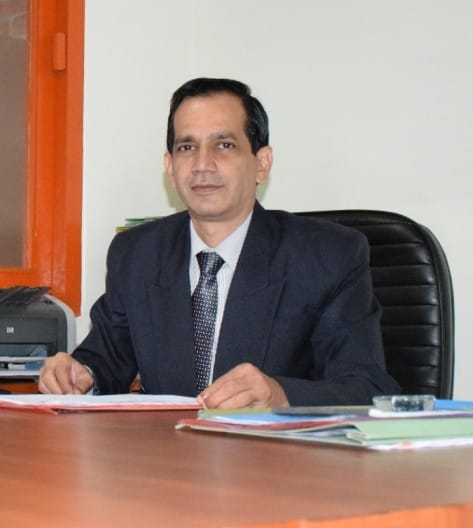
Dr.B.Madhura

Dr.B.Madhura

Associate Professor

SMS,Sreenidhi Institute of Science and Technology

Profile ID RP-003-8240 Joined 2026-02-09 5 articles
0Connections
4
Total Views
5
Total Publications
139
Publication Views

Articles(5)

Authors: B. Madhura

DOI: 10.5958/2321-5763.2020.00003.7

Volume11
Issue1
Pages11
Abstract

The positive organizational climate is one of the factors which affect employee’s behavior. Studies in the organizational psychology and organizational behavior literature have shown that organizational climate and employee commitment are major factors to the organizational achievement. The purpose of this study was to inspect the relationship between organizational climate and employee’s organizational commitment. The research come within reach of applied for this study was quantitative approach in nature. The target population of this study was nurses working in select private hospitals located at Hyderabad city. From the total population of the nurses working in government and private hospitals, three hundred and twelve nurses were selected as the sample of the study. The convenience sampling method was used to the respondents. The consistent questionnaires of organizational climate and organizational commitment were adapted and modified from previous standard questionnaire. The standardized questionnaires of organizational climate and organizational commitment were adapted and modified from previous standard questionnaire. To undertake the study, Questionnaires were distributed to six hundred nurses but, response from three hundred and twelve respondent’s responses was found valid for analysis. The correlation between the welfare facilities and company prestige and synergistic work relationship is found to have strong association among all factors of climate and commitment. The outcome of the study indicates that organizational climate has a significant positive relationship with employees’ organizational commitment. All climate dimensions used in this study (Scope for Advancement, Grievance Handling, Monetary Benefits, Participatory Management, Objectivity and Rationality, Recognition and Appreciation, Safety and Security, Training and Education and Welfare Facilities) have significant positive relationship with organizational commitment.

Authors: Dr. Madhura Bashetty

DOI: 10.64252/bpehxn64

Volume11
Issue6
Pages114-124
Abstract

The present research article aims to study students’ perceptions about the school environment with regard to various aspects such as teachers, classmates, subjects, homework, co-curricular activities, and parental attitude. Assessment of students’ feedback aids in identifying the pros and cons of the learning climate of students. The sample study includes both male and female students who are studying in eighth, ninth, and tenth classes. A simple random technique has been adopted. With a finite population, sample size has been determined using Cronbach's alpha. The research method is purely empirical in nature; data collection is done through the survey method using Rao’s student inventory consisting of thirty items of all six variables. Statistical tools like factor analysis and item analysis have been used to study each item statement. The results of the student indicate there is not much difference of perception about the school environment among students of classes 8th, 9th, and 10th. Besides, around eight factors have been extracted, the first factor being school environment, parents, classrooms, head of the institution, academic activities, homework, classmates, and teachers. In conclusion, teachers are change agents in building the personality of a student, yet further, there are other factors beyond impacts on the growth of a student.

Authors: Madhura B.

DOI: 10.21863/jem/2025.14.2.001

Volume14
Issue2
Pages1-10
Abstract

Overwhelmed with the crisis of unemployment, to boost up the exports, a country to be self-reliant, a lot of efforts have been kept by the governments to encourage and ignite the entrepreneurial skills among the students who are key human capital assets of a country. Besides, to gain sustainability goals, a key emphasis on entrepreneurship education has been focused on to imbibe the entrepreneurial culture among students. Although several studies attempted to study the behavioural, cognitive and affective attitudes of students towards entrepreneurship, it is a need to conduct research every time as the new generation of students comes out for employability every year. The present research paper aims to understand the cognitive, affective and behavioural attitudes of the students studying engineering in Hyderabad city. The exploratory research method has been adopted with a sample study of two hundred and sixty students of different engineering streams. Primary data was collected using a structured questionnaire with a Likert scale rating. The findings of the study indicate that the behavioural attitude of the students to aspire to be entrepreneurs is higher, followed by cognitive and affective attitudes. Further in this article, an attempt was made to study each item pertaining to the behavioural, cognitive and affective attitudes of the students. Item analysis has been carried out with emphasis on each statement. Entrepreneurial education programs need to be further strengthened on a continuous cycle.

Authors: , B. Madhura

DOI: 10.33140/ctmc.04.01.05

Volume4
Issue1
Pages01-10
Abstract

Background: Present research work intent to explore the significance of soft skills in academics besides employability among the engineering graduates. While soft skills show a key impact cutting-edge on personality of an individual gaining a good grade and prosper in job beside business. Objective: The behavioural traits have major effect on the overall performance of the individuals, the skills that enhances one’s ability to think, solve problem, take effective decision making, time management, teamwork allows to reach the goals ahead. Methods: The simple random sample method has been implemented for the current study; sample study includes the graduates studying engineering. The questionnaire consists of six variables of soft skills, Team work, Work ethics, time management, problem solving, creativity and leadership. The hypotheses testing has been done using descriptive statistics, correlation, multiple linear regression and factor analysis. Results: leadership, time management and work ethics are highly essential for all the graduates with irrespective of age levels. Creativity skills, Problem solving skills and leaderships skills scored high variance. Conclusion: Among other things, it was suggested that in order to guarantee students' success in their chosen occupations and to improve their academic achievement, governments, school administrators, and all other stakeholders should make sure that the development of soft skills as a significant part of the school as well as college and University curriculum.

Authors: Madhura Bashetty

DOI: 10.2139/ssrn.4639698

Volume6
Issue1
Pages18-19
Abstract

“If there is a remedy, I feel it must lie in how we prepare our young for life” – Daniel Goleman, Emotional Intelligence. The main intent of writing this particular article is to examine the emotional intelligence levels among the young generations particularly the young technocrats from engineering stream, many articles, news clippings, reports and survey has been stating that there found to be lack of skills, abilities, motivation, self management and knowledge among them. As such from last few years companies found emotional intelligence is more essential to predict the individual performances and success than even more intelligent quotient. Perhaps it found to be necessary to collect the data from the students itself to know virtually to what extent they are good at in managing the different emotions and moods. The required data for the study has been collected through well developed questionnaire, data analysis has been done using SPSS, reliability analysis, descriptive analysis and Anova statistical test has been applied. The major findings of the study say that there found to be no significant difference between the emotional intelligence levels among young technocrats males and females.

No matching articles

Try another word from the title, author or DOI.

Brief Bio

No bio added yet.

Affiliations

Nothing added yet.

Education

Nothing added yet.

Honors & Awards

Nothing added yet.

Society Memberships

Nothing added yet.

Expertise

Nothing added yet.

Specialty

Nothing added yet.

Other Online Pages

Scholars in the same field

SD
Snehal dinesh borana
0 publications
CM
Carol Mary Koshy
0 publications
VG
Vineeta Gupta
0 publications
RN
Raveena Nagaram
0 publications
SJ
shweta jha
ip innovative
0 publications
Dr Sameer Dileep Joshi
LNBCIEM Satara Maharashtra
0 publications
П
Павло
https://orcid.org/0000-0002-7760-9610
0 publications
KK
KARAMVIR KARAMVIR
0 publications

Following

Nobody here yet.

Followers

Nobody here yet.