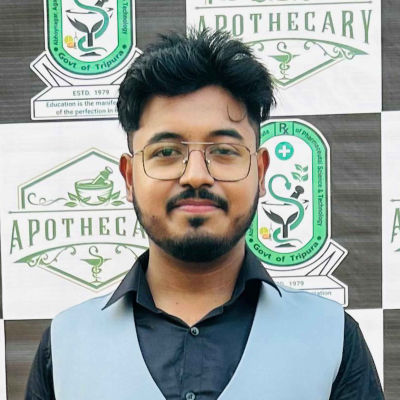
Md Ikbal Husain

Md Ikbal Husain

Student (M.Pharm)

Regional Institute of Pharmaceutical Science and Technology (RIPSAT), Agartala

Profile ID RP-003-6275 Joined 2025-10-19 7 articles
0Connections
10
Total Views
7
Total Publications
175
Publication Views

About me

I am currently pursuing a Master of Pharmacy (M.Pharm) with a specialization in Pharmaceutics. My research focuses on formulation development, natural product research, and anticancer drug discovery. I am particularly interested in exploring bioactive compounds from medicinal plants and developing innovative nanoformulations for enhanced therapeutic efficacy. By integrating traditional herbal knowledge with modern nanotechnology, I aim to design advanced cosmeceutical and anticancer products that contribute to improved healthcare and patient outcomes.

Articles(7)

Authors: Kamallochan Barman, Sudarshana Borah, Bhanita Das, Tanjima Tarique Laskar, Debarupa Dutta Chakraborty, Prithviraj Chakraborty, Lilakanta Nath, Jiaul Ahmed Mazumder, Rupajit Bhattacharjee, Md Ikbal Husain, Takhelmayum Priyadini Devi

DOI: 10.52783/jns.v14.2605

Volume14
Issue8
Pages781-787
Abstract

Background: Curcuma caesia Roxb., (Black turmeric), a distinct variety of medicinal herb belonging to Zingiberaceae family is an underexplored plant of Assam, India whose essential oil composition and historic uses set it apart from other members of its family. This study aims to explore the anticancer potential of the phytoconstituents of this herb against ovarian cancer cell line. Method: In-silico Molecular docking was carried out using PyRx for assessing the effectiveness of active constituents (Isoborneol, Alloaromadendrene, (+)-2-Bornanone, α- Santalol, Ar-tumerone, Megastigma-3,7(E),9-triene, 5,8,11,14,17-Eicosapentaenoic acid methyl ester,  Retinal,9-cis, Androstenediol, Camphor, Benzene-1-(1,5-dimethyl-4-hexenyl)-4-methyl, 1,8-Cineole, β-elemene, Bornyl acetate & α-terpineol) against ovarian cancer protein (PDB ID:2NS2) and the potential 2D interaction of the active constituents with binding site of receptor was visualized using Biovia Discovery Studio software. For anticancer study, the rhizomes of Curcuma caesia Roxb., were extracted successively using Soxhlet extraction by hexane, ethyl acetate and methanol extracts respectively and the methanol extract (MECC) containing Androstenediol fraction was assessed for cytotoxicity against PA-1 ovarian cancer cell line by employing the MTT assay. Result: The outcome of the in-silico analysis demonstrated the highest binding affinity of Androstenediol with a binding score of -7.1 kcal/mol and the 2D interaction revealed that the favorable interacting residues are GLN A:210, ALA A;132, PRO A:135 and VAL A:211 respectively. In cytotoxicity analysis, it was found that there was a dose-dependent reduction in cell viability with an IC50 value of 610 µg/ml. Apoptosis analysis through flow cytometry further revealed that MECC induced significant levels of early apoptosis (23.09%) and late apoptosis (3.50%) with negligible necrosis indicating that the extract primarily triggers programmed cell death. Conclusion: This study suggests that the presence of bioactive compounds in Curcuma caesia Roxb. holds promising anticancer properties which provides a foundation for the development of novel plant-based anticancer therapies.

Targeting Breast Cancer Complexity: Molecular Signalling, Microenvironment and Next-Generation Therapeutic Strategies 2025

Authors: Tanjima Tarique Laskar, Monica Arora, Jiaul Ahmed Mazumder, Rupajit Bhattacharjee, Md Ikbal Husain, Bandana Das, Panchami Das, Paromita Dutta Choudhury , Jhankar Sharma, Suhani Gogoi

Volume43
Issue8
Pages464-506
Abstract

Breast cancer is a leading global health concern characterized by molecular heterogeneity and complex pathogenesis, fueled by intricate signaling pathways that trigger its genesis, progression and therapeutic resistance. This assessment delves into the elucidation of intricate molecular pathways navigating oncogenic cascades, including hormone receptor signaling driven by estrogen and progesterone, HER2-mediated cascades, PI3K/AKT/mTOR, RAS/MAPK, Wnt/β-catenin, JAK/STAT and Notch signaling pathways, alongside their influence on tumor behavior through interplay with metabolic reprogramming notably the Warburg effect and epigenetic modifications, including DNA methylation and histone alterations. The tumor microenvironment, comprising anti-inflammatory macrophages, tumor- infiltrating lymphocytes, cancer-associated fibroblasts and the extracellular matrix, further governs immune evasion, angiogenesis and metastasis. This review underscores advancements in therapies targeting these pathways, including endocrine therapies (selective estrogen receptor modulators, aromatase inhibitors, selective estrogen receptor degraders), immune checkpoint inhibitors (pembrolizumab, atezolizumab), HER2-targeted agents (trastuzumab, T- DXd), CDK4/6 inhibitors (palbociclib, ribociclib) and PARP inhibitors (olaparib, talazoparib). It also emphasizes emerging cutting-edge strategies, such as antibody-drug conjugates, PROTACs and RNA-based therapies (siRNAs, antisense oligonucleotides) to overcome drug resistance and enhance personalized therapies. Despite significant advancements, challenges such as tumor heterogeneity, pathway crosstalk, clonal evolution, immune suppression and acquired resistance reinforce the need for biomarker-driven combination therapies. By integrating multi-omics and AI-driven technologies into drug development, future treatment prospects aim to achieve personalized, durable and sustained responses to improve patient outcomes.

Authors: Biplab De, Koushik Choudhury, Yorna Sila, Md. Ikbal Husain, Lokesh Deb, Mukunda Anuj Sharma, Bishal Tiwari

DOI: 10.5281/zenodo.17214071

Volume14
Issue19
Pages541-550
Abstract

The diabetes is increasing at alarming rate. Leucaena Leucocephala (Family: Fabaceae) has often been used as traditional medicine, especially the leaves and seeds. It is observed that plant parts were able to show antidiabetic potency.

Authors: Tanjima Tarique Laskar, Hasina Mehnaj Laskar, Jiaul Ahmed Mazumder, Rupajit Bhattacharjee, Md Ikbal Husain, Bandana Das, Panchami Das, Paromita Dutta Choudhury, Monica Arora, Sudarshana Borah, Debarupa Chakraborty, Prithviraj Chakraborty, Amlan Das

DOI: 10.1007/s12672-025-03764-w

Volume16
Issue1
Pages1-43
Abstract

Breast cancer is a highly heterogeneous malignancy encompassing distinct molecularsubtypes such as Luminal A & B, HER2 enriched and triple negative breast cancer,each characterized by unique genomic, transcriptomic and proteomic landscapesthat dictate differential prognosis and therapeutic response. This review delineatesthe complex signalling pathways underlying breast cancer including estrogenreceptor, progesterone receptor and HER2 pathways and their downstream effectorssuch as PI3K/AKT/mTOR, RAS/MAPK, Notch, Wnt/β-catenin and JAK/STAT cascades.The interconnectivity of these pathways not only governs tumor cell proliferation,survival and metastasis but also contributes to intrinsic and acquired resistancemechanisms against standard-of-care therapies including endocrine agents, HER2-targeted antibodies and chemotherapy. Emerging therapeutic strategies such asnext-generation selective estrogen receptor degraders, proteolysis-targeting chimeras,antibody-drug conjugates, immune checkpoint inhibitors and pathway-specificsmall-molecule inhibitors highlights their mechanistic rationale, clinical evidence andbiomarker-guided applicability. Resistance mechanisms involving ESR1 mutations,PTEN loss, p95HER2 expression, BRCA reversions and tumor microenvironment-mediated immunosuppression contributes to therapy resistance. The review exploresmolecular subtypes, oncogenic signalling pathways, treatment approaches, resistancemechanisms including acquired resistance & crosstalk, metabolic reprogramming,epigenetic modifications, immune modulations and tumor microenvironment, spatialtranscriptomics insights into immune cell subsets & treatment response biomarkersand the role of artificial intelligence in breast cancer treatment. The integration ofartificial intelligence-based predictive modelling and rational drug combinationsoffers a promising paradigm for overcoming resistance and tailoring precisiononcology approaches. By comprehensively mapping these oncogenic factors andtherapeutic intersections, this review provides a strategic framework for optimizingbreast cancer management in the era of molecular medicine.

Essential Oil-Based Microemulsions In Antimicrobial Applications: A Natural Approach 2025

Authors: Arindam Chakraborty and Md Ikbal Husain

Volume13
Issue11
Pages55-58
Abstract

The growing resistance to conventional antimicrobials has accelerated the demand for safer, ecofriendly alternatives. Essential oil-based microemulsions (EO-MEs) have emerged as promising carriers for antimicrobial applications, offering improved solubility, stability, and penetration. This review outlines recent advancements in extraction techniques for essential oils, the principles and formulations of microemulsions, and their efficacy against various microbial strains. Emphasis is placed on Citrus-based essential oils, particularly lemon (Citrus limon), which exhibit broad-spectrum antimicrobial activity. The paper also discusses evaluation strategies, stability considerations, and the future scope of EO-MEs in therapeutic and industrial domains.

The First Step Into Death: Postulation on Identifying the Initial Irreversible Event That Ends Life 2025

Authors: Md Ikbal Husain and Biplab De

Volume10
Issue1
Pages39-43
Abstract

Life and death are not sudden events; rather, they are a series of irreversible chemical changes for normal event. There are many unexplained issues related to DNA-RNA, Neuroscience, Soul, life after death etc. knocking almost everyone, then also both the event of life and death have been continuing and continuing under the control of nature. For centuries, both philosophers and scientists have been interested in figuring out the initial stage of this process of death in normal cases. According to recent research, mitochondrial dysfunction more precisely, the opening of the mitochondrial permeability transition pore (mPTP) is the first irreversible event in cellular death. This review explores the biochemical, physiological and philosophical implications of defining the starting point of death. It highlights the cellular conditions necessary for life, the mitochondrial processes that cause permanent harm and how these scientific understandings relate to philosophical viewpoints regarding the nature of life's end. In addition to defining mortality, an understanding of the initial irreversible event of death gives therapeutic opportunities for reducing pathological cell death in serious disorders

Bioactive Metabolites: Unlocking Nature’s Therapeutic Potential through Advanced Extraction and Sustainable Innovation 2025

Authors: Jayita Das, Jiaul Ahmed Mazumder, Md Ikbal Husain, Rupajit Bhattacharjee, Subrata Das, Priyanka Majumde, Panchami Das , Paromita Dutta Choudhury and Bandana Das

Volume16
Issue93
Pages104875 - 104888
Abstract

Bioactive metabolites represent a diverse class of compounds derived from natural sources, offering significant therapeutic potential in addressing chronic diseases, antimicrobial resistanceand health optimization. This comprehensive review explores the origins, biological activities, extraction, purification and applications of these metabolites. Recent discoveries highlight novel metabolites, such as 2-furoic acid from endophytic fungi for nematocidal activity and streptoseomycin from marine bacteria for antibacterial effects, underscoring their role in drug development. Conventional extraction methods, including solvent-based techniques like maceration and Soxhlet, are contrasted with advanced green approaches such as supercritical fluid extraction, ultrasound-assisted extraction and microwave-assisted extraction, which enhance yield, sustainability, and purity while minimizing environmental impact. Purification strategies, encompassing high-performance liquid chromatography, gas chromatography and ion-exchange chromatography, ensure high-purity isolates for pharmaceutical and biotechnological uses. Factors influencing efficiency, such as solvent polarity, temperature, matrix characteristics, and optimization tools like response surface methodology are critically analyzed. The global market for bioactive metabolites, valued at USD 40 billion in 2022 and projected to reach USD 55 billion by 2028, is driven by rising chronic illnesses and biotechnological advancements. This review emphasizes the need for sustainable sourcing and innovative technologies to harness these compounds for safer therapeutics, nutraceuticals, and cosmetics, bridging traditional knowledge with modern science for improved human wellness

No matching articles

Try another word from the title, author or DOI.

Brief Bio

I am currently pursuing a Master of Pharmacy (M.Pharm) with a specialization in Pharmaceutics. My research focuses on formulation development, natural product research, and anticancer drug discovery. I am particularly interested in exploring bioactive compounds from medicinal plants and developing innovative nanoformulations for enhanced therapeutic efficacy. By integrating traditional herbal knowledge with modern nanotechnology, I aim to design advanced cosmeceutical and anticancer products that contribute to improved healthcare and patient outcomes.

Affiliations

Nothing added yet.

Education

Nothing added yet.

Honors & Awards

Nothing added yet.

Society Memberships

Nothing added yet.

Expertise

Nothing added yet.

Specialty

Nothing added yet.

Scholars in the same field

SN
Soumya Nayak
0 publications
AS
ankit Singh singh
0 publications
VK
VARUN KUMAR
0 publications
NA
Nirali Alaiya
0 publications
MB
Monika Bharti
0 publications
DB
Daksh Bhatnagar
0 publications
YS
yatakona supriya
0 publications
RS
R SANJAY
0 publications

Following

Nobody here yet.

Followers

Nobody here yet.

7 Publications

Targeting Breast Cancer Complexity: Molecular Signalling, Microenvironment and Next-Generation Therapeutic Strategies

Authors: Tanjima Tarique Laskar, Monica Arora, Jiaul Ahmed Mazumder, Rupajit Bhattacharjee, Md Ikbal Husain, Bandana Das, Panchami Das, Paromita Dutta Choudhury, Jhankar Sharma, Suhani Gogoi

Published in 2025

Essential Oil-Based Microemulsions In Antimicrobial Applications: A Natural Approach

Authors: Arindam Chakraborty and Md Ikbal Husain

Published in 2025

The First Step Into Death: Postulation on Identifying the Initial Irreversible Event That Ends Life

Authors: Md Ikbal Husain and Biplab De

Published in 2025

Bioactive Metabolites: Unlocking Nature’s Therapeutic Potential through Advanced Extraction and Sustainable Innovation

Authors: Jayita Das, Jiaul Ahmed Mazumder, Md Ikbal Husain, Rupajit Bhattacharjee, Subrata Das, Priyanka Majumde, Panchami Das, Paromita Dutta Choudhury and Bandana Das

Published in 2025


