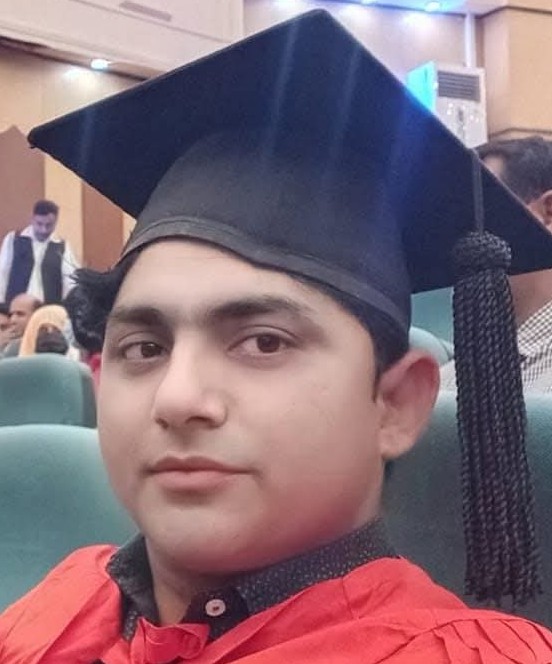
Dr Imtiaz Hussain

Dr Imtiaz Hussain

Researcher

Bahauddin Zakaria University Multan

Profile ID RP-003-3770 Joined 2025-06-17 9 articles
0Connections
6
Total Views
9
Total Publications
297
Publication Views

About me

Researcher in media and communication studies, dedicated to producing impactful and evidence-based knowledge.”

Articles(9)

Authors: Imtiaz Hussain, Shahzad Ali

DOI: 10.52700/pjh.v3i2.130

Volume3
Issue2
Pages360-391
Abstract

This article deals with the dominant themes that emerged in the Bollywood Cinema about religious minority groups Like Muslims, Christian, and Sikhs. The research utilized the structure provided by the Clerk and Brown 2006 in terms of thematic Analysis. Thirty movies were selected through purposive and random sampling. Ten movies were represented by each minority Group. The dominant themes found with regard to the Muslim community in Bollywood movies were Islamic terrorism, Islamophobia, economic, education backwardness, and Muslim identity, Sikh dominant themes were found as Comedian, Sikh Identity, Brave, and truthful. Similarly, Christian themes were Westernized, Christian Identity, erotic, and Prostitute. Based on Historic and the critical thematic analysis as well as theoretical grounds of Hall’s representation, Said's Concept of Orientalism, and Noam Chomsky’s propaganda model concept, the research clearly indicated that the Bollywood Cinema blurred the identity of religious minority groups and decorated them as others, for example, it distorts the religious concepts, promotes Islam phobia and connecting Islam with the terrorism, in terms to Muslims treated as brutal, extremist, shelter provider, the danger for the state, etc and Sikh as a painted comedian, drinkers and their culture in merged with the Hindus rituals as well as Christian minority female painted erotic object, westernized and Hypersexual. The research clarifies that the Bollywood cinema articulates the content of the movies under the umbrella of the elite political mindset.                                                                       

Image of Religious Minorities in Bollywood Cinema: A Content and Cinematic Analysis 2023

Authors: Imtiaz Hussain, Shahzad Ali

Volume14
Issue1
Pages24-41
Abstract

Ali2AbstractBollywood films are fashionable for hundreds of thousands in India and Pakistan as well aswithin the West.Theresearch explored the imageof religious minority characters in Bollywood Movies with a quantitative and qualitative approach. Thirty movies were chosenrandomlywhichhaveleading religious minority characters Muslims, Christians, and Sikhs. Theoretically, this researchinterconnectedwithPolitics ofRepresentation byStuart Hall,framing theory and Cinematography.The content analysisof the studyevidentlyshowedthat the religious minoritieswas painted as unfavorable slant.Unfavorable slant by Muslims minorities which was 54.4% while, 52.5% Christian community and 46.1% Sikhs characters. Whereas favorable slant was highlighted that Sikh community which was 42.7% similarly, Muslim minority was 33.5% and Christians minority 36.1% counted Moreover,Muslims minority were painted as dishonest 68.4%, thoughtless 67.4%, ugly 56.3%, unfair 54.5%, cowardly 47% and bad 44% whereas Christian minority character were portrayedmore intelligent 62.1%, mature 42.7% and attractive 41.8% while, Sikh minority character were painted as comedian 61.9%, unsuccessful 50%, religious 45% and brave 43.5%.Qualitatively, CinemaDepictedMuslimsimageas psychologically militant dreadfulindividuals, andfear-based oppressors,deceivers, traitorous, and horrible. Hindi films have wrongfully portrayed the MuslimsMinorityeither as non-modern feudal characters or as anti-national, terrorist, villain, or anti-social characters. A Sikh is known for his strength and valor, comedians while Christian minority female represented as erotic object. Keywords:Image, framing, Cinematography, religious minorities, politicsof

Authors: Imtiaz Hussain, Shahzad Ali, Syed Ali Akbar Gardezi

DOI: 10.31703/gdpmr.2023(vi-i).13

Volume6
Issue1
Pages151-165
Abstract

Bollywood Cinema has extended fame on the global streets and gained enormous clout through its massive audience. This current research discovers the religious symbols in thirty Hindi Films with regard to the top three minorities in India i.e. Muslims, Christians, and Sikhs. The study theoretically connected with Pierce's theory of symbol and representation theory by Stuart Hall.Qualitative descriptive semiotic analysis was applied to identify the religious symbols and reveal the underlying meaning associated with the minority characters. The symbolic analysis exposed the agenda of the Bollywood films that the symbols associated with the three minor religions like Muslim beards, caps or veils and the concept of Jihad, Sikh turbans and Christian cross were represented in a distorted and negative way. The research is a humble opinion to provide more awareness of movie makers, directors, and producers toward minority religions before making films pertaining to religious minorities.

Authors: Dr Imtiaz Hussain

DOI: 10.4172/2165-7912.1000272

Volume5
Issue8
Pages2-6
Abstract

This study aimed to explore the news framing of Indo-Pak Conflicts with regard to war and Peace Journalism by Times of India and The News, Pakistan. The foremost objective of this research was to measure the stance of the Pakistani and Indian prestigious newspaper towards treatment of Indo-Pak Conflicts especially the issues relating to Kashmir and Terrorism. This research study utilized the content analysis in which unit of analysis was the entire news story published in above said newspapers for the period of one year. The news slant was categorized into favorable, unfavorable and neutral. It was found that Daily the News published 364 while 435 news stories were published on Indo-Pak Conflict with special reference to Kashmir and Terrorism conflicts throughout the period of study. The peace frame in the News, Pakistan was more likely to be slanted as compared to Times of India. Furthermore, it was also hypothesized that war frame would be used greater by the Times of India and the data confirmed this prediction made by the researcher and it was found that the level of war frame especially on the issue of Kashmir, Times of India utilized the hatred language and such words of war frame were measured in the Times of India coverage which clear cut depicted the picture of promotion of war between India and Pakistan. It can be safely concluded that peace frame in the News, Pakistan while War frame in Times of India were measured as more than their neutral coverage on war and peace. Moreover, the findings revealed that on the issues related to mutual cooperation and Indo Pak relations the favorable portrayal was observed in The News, Pakistan but there was a significant number of unfavorable coverage in Times of India with regard to Indo Pak conflicts. War frames on Kashmir Issue and Terrorism disputes was also found greater in Times of India as compared to The News, Pakistan who promoted peace

Authors: Imtiaz Hussain, Abdul Ghani, Shahzad Ali

DOI: 10.64428/rm/v4.i2.3

Volume4
Issue2
Pages24-39
Abstract

This study focuses on the historical portrayal of Hindu vs. Muslim characters in Bollywood cinema, utilising the frameworks of semiotic analysis, cinematography and the propaganda model by examining films spanning decades. Through semiotic analysis, the researcher identifies the visual signs, indices and symbols used to construct religious identity in Bollywood cinema. Historically, Hindu characters were depicted as noble, morally strong, loyal warriors, brave fighters, religiously well-framed and painted as a complete package of humanity while the Muslim characters were depicted as exotic, associated with negative attributes such as greed, power hungry, rapist, betrayal, religious fanatics and sexually predatory. This portrayal obscures the complexities of historical figures and events, further perpetuating Islamophobic viewpoints that are already prevalent. Cinematically, camera angles depict Hindu characters in a more favourable light, such as with low-angle shots that make them appear larger and more heroic. On the other hand, Muslim characters were depicted in high-angle shots, making them smaller and less powerful. These visual cues contribute to the perpetuation of stereotypes and the reinforcement of social biases. The analysis of the films revealed that the cinema aligned with patriotic accounts to predominate in dogmatic interest. These results caused heightened tension among religious clutches that often threatened religious harmony between communities.

Authors: Imtiaz Hussain, Usman Idrees, Abdul Ghani

DOI: 10.52131/pjhss.2023.1103.0613

Volume11
Issue3
Pages3297-3310
Abstract

China grows a notable rise in the Past few decades, due to its economic developments. The findings speak about China’s rise of its image towards its foreign policy through the construction of its identity course in the Film media. This article focuses on the representation of China’s soft image concerning foreign policy in Wolf Warrior II film; a Chinese blockbuster movie released in 2017. The study explored the foreign affair and economic development from the perspective of the global south. Moreover, the research also argues that Wolf Warrior II expresses the hegemonic foreign strategies discourse provoked through the international diplomacy of China. The study is theoretically linked with the Representation theory by Hall and discourse theory. By applying the qualitative descriptive analysis of the Film, the research identifies the foreign ties and nationalistic discourse with a patriotic approach. The results of the study indicated that the Wolf Warrior film has raised the soft image of China in terms of foreign policy which is show the cause of China's military power and their love towards their homeland. Meanwhile, the film leads the regional and global governance protocols nationalistically. China builds new international relations with the Global South represented by BRI.

Depiction of Religious Minority Characters in Bollywood Movies: A Content and Semoitic Approach 2022

Authors: Imtiaz Hussain, Shahzad Ali

Volume4
Issue2
Pages39-55
Abstract

This research explored the representation of religious minority characters in Bollywood Movies with a quantitative and qualitative approach. Thirty movies were selected that had leading religious minority characters Muslims, Christians, and Sikhs. The study theoretically linked with Representation theory By Stuart Hall with semiotic lens and Framing theory. Every movie was analyzed six times in different dimensions. The unit of analysis was an entire scene, 1365 scenes were analyzed for the purpose of the portrayal of religious minority characters. The results of the research clearly indicated that the religious minority character was painted as negative in the Bollywood movies. Furthermore, Muslim characters in the Bollywood movies were more negative, Ridiculed, and Dumb and their behavior was more aggressive and language accents were harsher were counted as compared to other religious minorities. The Christian community was painted as lazy and Sikh Characters were portrayed as respected manner. Symbolically the minority characters were portrayed diversely in a bad manner and associated with terror actives. Bollywood become a worldwide communication medium and its portrayal is important in the East as well as in the West. Bollywood is playing a negative job of harming the picture of Islam, Sikhism, Christianity, and Muslims through such sort of portrayal.

UNPACKING ISLAMOPHOBIA IN BOLLYWOOD: A SOCIAL SEMIOTIC ANALYSIS OF "THE KARELA STORY FILM" 2026

Authors: Dr Imtiaz Hussain ,Dr Shahzad Ali

Volume4
Issue3
Pages390-411
Abstract

The article instigates with the debate that Bollywood Cinema redirects hazard bias towards the image of Islam while demonstrating the Muslims. This type of agendais promoted the roots of Islamophobic narrations. This research looks forward for deeper understanding of new insight the recent Bollywood movie “The Kerala Story” film under the cover of Islampohobia accounts. The study is conceptually guided by the Representation theory and Pierce Semitic theory. Methodically, the research is based on qualitative social semiotic, filmic and denotative analysis of the said phenomenon. With the passage of time, Islamophia is rising in the Bollywood Cinema. The description of Islam and Muslims is found holistically prejudiced. Results of study clearly indicated that the Bollywood Filmmaker is working on hate ideology against the Islam religion through fueling the Islamophobic discourse as portrayed Islam is barbic religion and Muslim as physical assaulter, Radical, black mailer, hypersexual, Deceivers, rapist and hyper aggressive. Furthermore, the Film promotes the idea of love Jihad; Muslims men convert to non-Muslim women into the circle of Islam by trapping them through their intimacy, love and marriage. This type of Film loves the religion Hinduism and circulated the Hate against the religion of Islam eventually; the moviemaker agenda is based on Hate Identity and fuelled Islampohobia around the globe. The propaganda Model developed by Noam and Chomsky also observed in the research. The study confirmed the filters of the Propaganda Model. The Film producers of Bollywood have been retained and intentionally patent the trail of Islamophobia. Similarly,in the modern times, Bollywood reveals the films are annoying to finger out Islam and Muslim as new narration and painted as Barbic in India. The researcher suggested that the producers, film directors should be more factual and mindful towards description of Islam religion

Authors: Imtiaz Hussain

DOI: 10.15575/jassr.v7i2.134

Volume7
Issue2
Pages179-208
Abstract

AbstractReligious extremism remains a persistent challenge in Pakistan, and the growing use of social media has intensified concerns about online radicalization among youth. This study aimed to examine mosque imams’ perceptions of the role of Facebook and YouTube in promoting religious extremism among Pakistani youth and to test whether these perceptions differ by place of residence, educational qualification, and years of experience. Guided by Uses and Gratifications Theory, the study employed a diagnostic, survey-based design. Data were collected through a 20-item questionnaire administered to 411 mosque imams from two regions of Punjab. The instrument demonstrated strong reliability (? = 0.88). Results indicate that a large proportion of respondents believe Facebook and YouTube contribute to the spread of extremist ideologies among youth. Agreement levels were higher among imams in one region of Punjab compared with the other, and perceptions also varied by experience and education. Imams with around ten years of experience reported the strongest agreement. Educational background showed mixed patterns, with Dars-e-Nizami holders more likely to strongly agree, while some Bachelor’s degree holders expressed stronger disagreement. Chi-square and one-way ANOVA tests confirmed significant differences across residence, qualification, and experience. The study contributes empirical evidence by foregrounding imams as key informants in understanding online religious extremism. Practically, the findings imply a need for coordinated interventions involving digital literacy, community engagement, and structured collaboration between religious leaders, policymakers, and platform stakeholders to strengthen counter-narratives and reduce youth vulnerability.

No matching articles

Try another word from the title, author or DOI.

Brief Bio

Researcher in media and communication studies, dedicated to producing impactful and evidence-based knowledge.”

Affiliations

Nothing added yet.

Education

Nothing added yet.

Honors & Awards

Nothing added yet.

Society Memberships

Nothing added yet.

Expertise

Nothing added yet.

Specialty

Nothing added yet.

Scholars in the same field

VK
Vinay Kumar
0 publications
NK
Nithis Kumar S
0 publications
SJ
Dr Shreya jain
0 publications
YO
Yimkumna Ochi
0 publications
ZB
Zenish Bhatti
0 publications
SK
Surendra Kumar Pal
0 publications
RM
RAVINDRA MOHAN
0 publications
HP
Himanshu Pandey
0 publications
LT
LIKHITHA T G
0 publications
UG
UMER GULL KHAN
0 publications

Following

Nobody here yet.

Followers

Nobody here yet.

9 Publications

Image of Religious Minorities in Bollywood Cinema: A Content and Cinematic Analysis

Authors: Imtiaz Hussain, Shahzad Ali

Published in 2023

Depiction of Religious Minority Characters in Bollywood Movies: A Content and Semoitic Approach

Authors: Imtiaz Hussain, Shahzad Ali

Published in 2022

UNPACKING ISLAMOPHOBIA IN BOLLYWOOD: A SOCIAL SEMIOTIC ANALYSIS OF "THE KARELA STORY FILM"

Authors: Dr Imtiaz Hussain, Dr Shahzad Ali

Published in 2026

0 Contributions

Nothing added yet.

Filter


