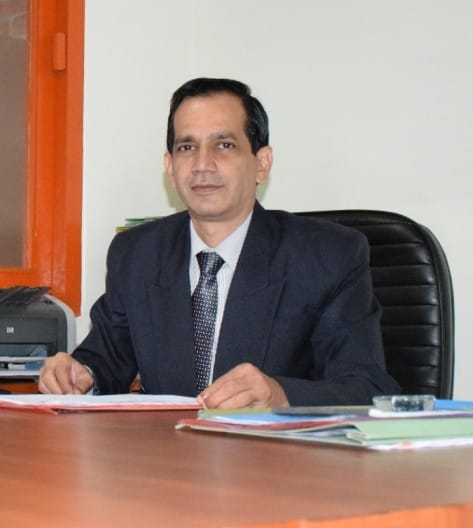
Rohit maganlal Dipwal

Rohit maganlal Dipwal

Senior resident

Shree bhausaheb hire goverment medical college, DHULE

Profile ID RP-003-2630 Joined 2025-04-21 4 articles
0Connections
5
Total Views
4
Total Publications
124
Publication Views

About me

I\\\'m an budding orthopedic surgeon

Articles(4)

Authors: Amol Khairnar, Rohit Maganlal Dipwal

DOI: 10.18231/j.ijos.2025.028

Volume11
Issue2
Pages147-151
Abstract

In the population of underage children and young adults, recurrent patella dislocation is widespread, with limited studies examining the effectiveness of medial soft tissue strengthening and lateral release procedures in averting recurrent dislocation. A 16-year-old male with Down syndrome presented with a chief complaint of pain and deformity at the left knee, with a history of recurrent falls while walking, and was unable to sit cross-legged. Patient evaluated with the Kujala score which is of 57. X-ray revealed lateral patellar dislocation on the patellar skyline view. The patient was operated on for right-sided Recurrent patellar instability with lateral retinacular release and medial soft tissue reefing and had a good clinical outcome 4 years back, and had no residual deformity or recurrence occur for the right lower limb. A surgical approach involving the same procedure of Lateral release and medial soft tissue strengthening was employed to address the condition, keeping the MPFL repair as the standby procedure. An 8 cm vertical midline patellar incision was made, followed by transection of the patellar retinaculum and synovium along the lateral border of patella and Medial retinacular reefing aka soft medial tissue strengthening was then performed through advancement of vastus medialis obliquus muscle and medial retinacular complex over the patella. Post-operative management included compression dressing and cylinder splinting, followed by gradual weight bearing and knee exercises. A considerable improvement in Kujala score was observed, increasing from 57 pre-operatively to 91 at 6-month and 1-year follow-ups. The study demonstrates the effectiveness of lateral retinacular release and medial soft tissue strengthening procedures in preventing recurrent patellar instability in young adults and underage patients. The procedure yields the favorable outcome with No re-dislocation of the patella. This surgical approach is particularly beneficial in low-resource settings where access to advanced orthopedic care and specialized facilities may be limited, making it a viable treatment option for patients in various healthcare environments. Keywords: Lateral retinacular release, Medial retinacular reefing, Recurrent patellar instability, Recurrent patellar dislocation.

Authors: Amol Khairnar, Akshay Deshmukh, Sayaji Bhamre, Atul Patil, Harshal Patil, Rakesh Sanivada, Rohit Dipwal

DOI: 10.18231/j.ijos.12444.1759129711

Volume11
Issue3
Pages249-254
Abstract

This report discusses a 26-year-old male presenting with swelling over the posterolateral region of the knee. Given that a giant cell tumour is a locally aggressive lesion, the knee joint X-ray reveals a cortical break suggestive of a likely pathological fracture. later, it was diagnosed with GCT of the proximal fibula, emphasizing the surgical decision-making and post-operative outcomes. This case highlights a rare occurrence of a giant cell tumor located in the proximal fibula. The patient underwent the elective surgical procedure with the meticulous dissection of the lateral compartment, followed by the excision of the tumour, done with intraoperative identification and salvage of the peroneal nerve and branches. The surrounding lateral soft tissue structures were meticulously aligned and secured through layered suturing. Intraoperative knee stability was checked. The rehabilitation strategy included guarded weightbearing and use of a brace. At the five-month and one-year follow-up, clinical evaluation revealed maintained knee stability and full mobility of the ankle and foot. This case exemplifies the importance of individualized surgical planning and highlights how selective standard reconstructive procedures can still yield favourable functional and oncologic outcomes in rare GCT locations.

Authors: Sayaji Bhamre, Rohit Dipwal

DOI: 10.22271/ortho.2025.v11.i4c.3843

Volume11
Issue4
Pages175-178
Abstract

Background: Plantar fasciitis is a common orthopedic condition that can significantly impact quality of life. Various treatment approaches have been explored, ranging from conservative management to surgical interventions. Multiple studies worldwide have compared the efficacy of local platelet-rich plasma (PRP) injections versus corticosteroid injections, yielding mixed results. Materials and Methods: This study was conducted at Shree Bhausaheb hire government medical college, Dhule, Maharashtra, India, following approval from the Institutional Ethics Committee (IEC). Between January 2024 to December 2024, a total of 50 patients were enrolled through random sampling after obtaining written informed consent. Results: Plantar fasciitis was most frequently observed in individuals aged 31-40 years and was more common in females than males. Occupation-wise, housewives and service providers were more commonly affected. Both local corticosteroid injections and autologous PRP injections were found to be effective in managing chronic plantar fasciitis. Corticosteroid injections provided rapid pain relief in the short term, but their efficacy declined over time. In contrast, PRP injections demonstrated superior longterm pain reduction. Patient outcomes were evaluated using the American Orthopedic Foot and Ankle Society (AOFAS) score and the Visual Analogue Scale (VAS) at baseline, 4 weeks, 6 weeks and 8 weeks. Assessments were performed for both treatment groups. Conclusion: Both corticosteroid and autologous PRP injections are effective treatment options for chronic plantar fasciitis. Corticosteroid injections are beneficial for short-term pain relief (up to 12 weeks in this study), whereas PRP injections provide more sustained, long-term pain improvement

Authors: Atul Patil, Rohit Dipwal

DOI: 10.22271/ortho.2026.v12.i2a.3893

Volume12
Issue2
Pages06-08
Abstract

Background: Appropriate perioperative antibiotic prophylaxis is a key preventive strategy against surgical site infections (SSIs) in orthopedic surgery. Despite well-established recommendations, deviations from guideline-based practices are frequently observed, particularly in resource-constrained settings. This study aimed to evaluate compliance with recommended antibiotic prophylaxis practices in orthopedic surgeries and analyze their association with post-operative clinical outcomes. Methods: A prospective observational study was conducted in Department of Orthopedics at Shree bhausaheb hire government medical college, Dhule. Adult patients undergoing orthopedic surgical procedures were enrolled over a 9-month period. Antibiotic prophylaxis practices were assessed for compliance with standard guideline principles, including antibiotic selection, timing, and duration. Patients were followed for 30 days (non-implant surgeries) and 90 days (implant surgeries). Surgical site infection rates and other outcomes were compared between compliant and non-compliant groups. Results: A total of 248 orthopedic surgical procedures were analyzed. Overall compliance with antibiotic prophylaxis guidelines was observed in 152 cases (61.3%). Surgical site infection occurred in 3.3% of compliant cases compared to 11.5% of non-compliant cases (p = 0.01). Prolonged post-operative antibiotic administration beyond 24 hours was the most common deviation. On multivariate analysis, non-compliance with antibiotic prophylaxis guidelines (adjusted OR 3.92), diabetes mellitus, and prolonged duration of surgery were independently associated with increased SSI risk. Conclusion: Non-compliance with recommended antibiotic prophylaxis practices is common in orthopedic surgery and is associated with significantly higher rates of surgical site infection. Improving adherence to evidence-based protocols represents a feasible and high-impact intervention to enhance surgical outcomes and promote antimicrobial stewardship

No matching articles

Try another word from the title, author or DOI.

Brief Bio

I\\\'m an budding orthopedic surgeon

Affiliations

Nothing added yet.

Education

Nothing added yet.

Honors & Awards

Nothing added yet.

Society Memberships

Nothing added yet.

Expertise

Nothing added yet.

Specialty

Nothing added yet.

Other Online Pages

Scholars in the same field

SD
Shivani Datta
0 publications
AS
ankit singh
0 publications
VK
VARUN KUMAR
0 publications
VK
Vinay Kumar
0 publications
MB
Monika Bharti
0 publications
ST
Sahista Tarunum
0 publications
PS
parimala subramani
0 publications
Dr Sameer Dileep Joshi
LNBCIEM Satara Maharashtra
0 publications
AR
Ananta Raj Sharma
0 publications
TK
Teja Kiran
0 publications
PV
Priyanka Vaswani
0 publications
ND
Dr Namrata Dogra
0 publications

Following

Nobody here yet.

Followers

Nobody here yet.

4 Publications

0 Contributions

Nothing added yet.

Filter