
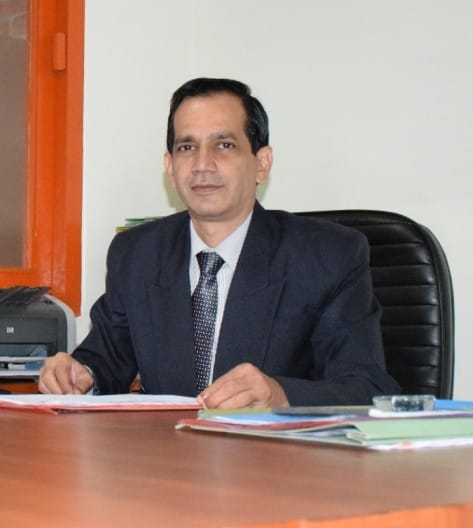
ARINDAM BHATTACHARJEE

ARINDAM BHATTACHARJEE

Assistant Professor

International Management Institute, Kolkata

Profile ID RP-003-1966 Joined 2025-03-18 4 articles
0Connections
8
Total Views
4
Total Publications
83
Publication Views

About me

Hi, I research on various HRM and OB topics including HPWS, abusive supervision, cyberloafing, perceived air pollution and inclusive leadership.

Articles(4)

Authors: Arindam Bhattacharjee, Anita Sarkar

DOI: 10.1007/s11301-022-00291-8

Volume74
Issue1
Pages1-34
Abstract

The interest generated by abusive supervision among researchers can be gauged from the fact that more than 140 articles on abusive supervision have been published by leading journals in the last five years alone. However, a comprehensive understanding of the same is lacking. As a result, we systematically reviewed 273 articles on abusive supervision published between 2000 and 2022. This enabled us to present five interrelated aspects of abusive supervision literature. First, we focus on the definitional issues associated with abusive supervision. Second, we examine two widely used abusive supervision scales. Third, we review and critique different research designs utilized in abusive supervision studies. Fourth, we look at the key theories underpinning abusive supervision research and map the nomological network of abusive supervision. Fifth, we suggest novel avenues for theoretical advancement. In sum, we endeavored to portray a detailed picture of research on abusive supervision.
Authors: Arindam Bhattacharjee, Anita Sarkar

DOI: 10.1108/itp-05-2022-0353

Volume37
Issue3
Pages1126-1155
Abstract

PurposeCyberloafing is an organization-directed counterproductive work behavior (CWB). One stream of literature deems cyberloafing to be bad for organizations and their employees, while another suggests cyberloafing is a coping response to stressful work events. Our work contributes to the latter stream of literature. The key objective of our study is to examine whether cyberloafing could be a means to cope with a stressful work event-abusive supervision, and if yes, what mediating and boundary conditions are involved. For this investigation, the authors leveraged the Stressor-Emotion-CWB theory which posits that individuals engage in CWB to cope with the negative affect generated by the stressors and that this relationship is moderated at the first stage by personality traits.Design/methodology/approachUsing a multi-wave survey design, the authors collected data from 357 employees working in an Indian IT firm. Results revealed support for three out of the four hypotheses.FindingsBased on the Stressor-Emotion-CWB theory, the authors found that work-related negative affect fully mediated the positive relationship between abusive supervision and cyberloafing, and work locus of control (WLOC) moderated the positive relationship between abusive supervision and work-related negative affect. The authors did not find any evidence of a direct relationship between abusive supervision and cyberloafing. Also, the positive indirect relationship between abusive supervision and cyberloafing through work-related negative affect was moderated at the first stage by the WLOC such that the indirect effect was stronger (weaker) at high (low) levels of WLOC.Originality/valueThis work demonstrates that cyberloafing could be a way for employees to cope with their abusive supervisors.

Authors: Arindam Bhattacharjee, Anita Sarkar

DOI: 10.1177/09721509221145414

Volume0
Issue0
Pages0
Abstract

The drivers of individual-level innovation remain an underresearched area. Based on JD-R theory, we argue that (a) high-performance work systems (HPWS) enhance employees’ innovative work behaviours (IWB) through an increase in employees’ work engagement, and (b) that the positive relationship between HPWS and work engagement will be magnified at high levels of work overload. We collected data from 313 supervisor-subordinate dyads in an engineering R&D organization in India. Structural equation modeling results supported all the hypotheses except the moderation hypotheses. Theoretical and managerial implications are discussed, and we suggest a few avenues for future research.

Authors: Arindam Bhattacharjee, Anita Sarkar

DOI: 10.1108/apjba-07-2024-0376

Volume0
Issue0
Pages0
Abstract

PurposeThe purpose of the paper is to understand whether, why and when role overload predicts an organization-directed CWB: cyberloafing. To do so, we utilize the Stressor-Emotion–CWB theory and social exchange theory.Design/methodology/approachThe authors collected data from 506 employees working in five Information Technology (IT) firms in India using a multiwave survey design. Results revealed support for all the hypotheses.FindingsThis study found that negative affect partly carries the influence of role overload to cyberloafing. Secondly, the results indicate that role overload has a direct and positive relationship with cyberloafing. Third and finally, we found that narcissism moderates the positive relationship between role overload and negative affect, followed by cyberloafing.Originality/valueThis paper showcases that role overload can evoke cyberloafing both as a coping mechanism and a retaliatory response directed at the organization. This paper further demonstrates that employees high in narcissism are vulnerable to stressors like role overload, and as a result, they experience more negative emotions and engage in more cyberloafing.

No matching articles

Try another word from the title, author or DOI.

Brief Bio

Hi, I research on various HRM and OB topics including HPWS, abusive supervision, cyberloafing, perceived air pollution and inclusive leadership.

Affiliations

Nothing added yet.

Education

Nothing added yet.

Honors & Awards

Nothing added yet.

Society Memberships

Nothing added yet.

Expertise

Nothing added yet.

Specialty

Nothing added yet.

Other Online Pages

Scholars in the same field

SN
Shikha Naagar
0 publications
RP
Rakesh Pandit
0 publications
AD
Arijit Dey
0 publications
SJ
shweta jha
ip innovative
0 publications
NA
Niyati Airan
Veer Chandra Singh Garhwali Government Institute of Medical Science and Research, Srinagar Garhwal, Uttarakhand.
0 publications
DL
Dhanya Leelamony
0 publications
Dr Sameer Dileep Joshi
LNBCIEM Satara Maharashtra
0 publications
TK
Teja Kiran
0 publications
PM
Dr Payal Mate
0 publications

Following

Nobody here yet.

Followers

Nobody here yet.

4 Publications

0 Contributions

Nothing added yet.

Filter