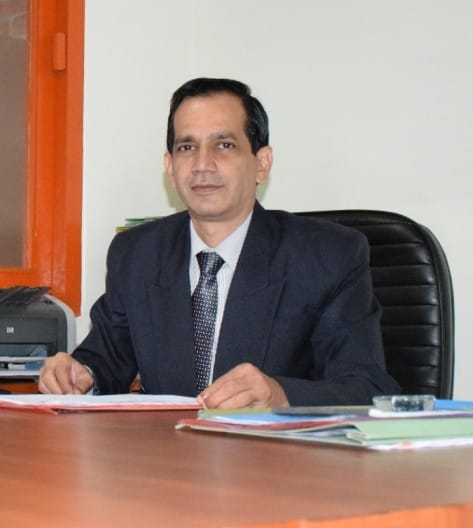
Dr. Aniket Kumar, Ph.D.

Dr. Aniket Kumar, Ph.D.

Project Manager

Regional Institute of Ophthalmology, Indira Gandhi Institute of Medical Sciences, Patna

Profile ID RP-003-0890 Joined 2025-01-12 5 articles
0Connections
9
Total Views
5
Total Publications
93
Publication Views

About me

Dr. Aniket Kumar is a distinguished scientist and project manager at the Regional Institute of Ophthalmology, Indira Gandhi Institute of Medical Sciences, Patna, with expertise in molecular genetics, genomics, and translational research. A Ph.D. in Biochemistry, he has spearheaded numerous groundbreaking studies, including the identification of 950 SARS-CoV-2 strains and molecular diagnostic advancements in breast cancer and ocular diseases. Dr. Kumar played a pivotal role in establishing a state-of-the-art Molecular Genetics Laboratory during the COVID-19 pandemic and currently leads a national initiative to create clinical trial networks for ophthalmology. His accolades include the prestigious Young Scientist Award (2021) for contributions to genomics and proteomics, and multiple peer-reviewed publications in high-impact journals. With a passion for advancing personalized medicine and public health, Dr. Kumar\\\'s research bridges basic science and clinical applications, setting benchmarks in healthcare innovation and translational science.

Articles(5)

Authors: Gopal S Pillai, Bibhuti Prassan Sinha, C. S. Sheeba, Manabjyoti Barman, Alok Sen, Natarajan Sundaram, Merin Dickson, Ashid Salim, Geethu Paul, Deepthi Geetha KrishnanNair, Manjisa Choudhury, Aniket Kumar, Poonam Jangidm, Anjana Abhilash

DOI: 10.4103/jcor.jcor_150_24

Volume13
Issue1
Pages9-13
Abstract

Context: Diabetic retinopathy (DR) is a major cause of vision impairment among diabetics, with significant regional variations in its prevalence and associated risk factors across India. Aims: This study aims to assess the variation in risk factors for DR, including demographic and behavioral characteristics, and to identify regional differences in the severity of DR across four geographic zones in India. Settings and Design: Data were sourced from the INDO EYE registry, encompassing six tertiary eye care hospitals across India. The study was designed to analyze and compare DR-related variables among different geographic zones: south, central, west, and east. Subjects and Methods: The study analyzed data from 7112 eyes of 3699 patients diagnosed with DR. Demographic, clinical, and behavioral data were collected, including age, gender, substance abuse history, comorbidities, and DR severity . Statistical Analysis Used: Descriptive statistics summarized demographic and clinical characteristics. Chi-square tests assessed associations between categorical variables, and one-way ANOVA evaluated continuous variables across zones. Statistical significance was set at P < 0.05, with analysis performed using the IBM SPSS Statistics 28. Results: The study revealed significant regional differences in DR severity and risk factors. The central zone had the highest proportion of proliferative DR and diabetic macular edema, while the south and west zones showed better visual outcomes and higher proportions of certain comorbidities. The east zone exhibited higher substance abuse rates and a broader range of visual acuity outcomes. Conclusions: Regional disparities in DR prevalence and severity highlight the need for targeted public health strategies to address local risk factors and improve diabetes management across India. Enhanced healthcare access and tailored interventions are crucial for reducing DR-related vision loss.

Authors: Shardhanjali Sinha, Aniket Kumar, Ashis Kumar Ghosh

DOI: 10.4103/jigims.jigims_13_23

Volume9
Issue2
Pages131-136
Abstract

Introduction: To date, a few research studies have reported the significance of synaptonemal complex protein 3 (SYCP3) gene mutation in breast cancer. The present study aims to identify SYCP3 gene mutation in the case of breast cancer in female Albino mice and to assess the interaction of mutated SYCP3 protein with the drug methotrexate (MTX). Materials and Methods: To induce breast cancer in female Albino mice, the carcinogen 7, 12-Dimethylbenz (a) anthracene was used. The blood samples were collected from mice that developed breast cancer and a polymeric chain reaction was performed to check the mutation in the SYCP3 gene with a specific primer. Thereafter, whole genome sequencing was performed, which was further validated by referring to online bioinformatics databases and tools. Results: After performing whole genome sequencing and translation, the normal SYCP3 sequence was compared with the mutated one, where a frameshift mutation was observed in which 1 bp was deleted at position (643delA) (Al ─A that codes for ILE at position 197 (ILE ─I in protein sequence. The free binding energy released by the interaction of MTX with the mutated SYCP3 protein (MET, GLU, GLN, GLU, and ILE) was lower (−3.09 Kcal/mol) than that of the interaction of normal SYCP3 protein. Therefore, the mutated SYCP3 and MTX interaction can be considered the best molecular docking interaction. Conclusion: The present study is imperative to recognize a potential therapeutic agent to cure breast cancer. It ultimately paves the way to modify the existing line of treatment for different pathological conditions of breast cancer and promote personalized medicine.

Authors: , Aniket Kumar, Ashis Kumar Ghosh, , Sudhanshu Kumar Bharti, , Manisha Kumari, , Ranjit Kumar, , Ghanish Pajwani, , Avinash Rajra

DOI: 10.22232/stj.2020.08.01.02

Volume8
Issue1
Pages24-32
Abstract

This study analyse the performance of tissue-based proteomics for early diagnosis of breast cancer for reducing its risk by identifying the causal factors. Breast cancer was induced by 7, 12-Dimethylbenz(a)anthracene (DMBA) in female albino mice followed by blood and tissue sample collection for biochemical and histological analysis. Total protein was isolated and quantified and peptides were detected by SDS-PAGE. For proteomics analysis and generation of peptide peaks, Matrix Assisted Laser Desorption/Ionization-Time of Flight-Mass Spectroscopy (MALDI-TOF-MS) was used and identification of unknown molecular weight was done by Mascot Server. DMBA induced tumor weighing 8.96± 0.90 g with a volume of 3.24± 0.65 cm3 was observed compared to no growth of controlled mice. Biochemical parameters like lipid peroxide (malonaldehyde), pro-inflammatory cytokines (IL-1b, IL-6 and TNF-a), enzymatic antioxidants (SOD and CAT) and non-enzymatic antioxidants (GSH, GPx and vitamin C and E) were found significantly increased. Further, MALDI-TOF mass spectroscopy generated unique peaks with molecular weight 2061.7961, 2064.968 and 2067.0154 with their respective peptide sequences. Computational analysis with mascot server identified unique signature metabolites of breast cancer. Therefore, this study safely submit that proteomic technologies can be employed to identify breast cancer protein patterns offering better diagnostic possibilities in the form of effective markers for early disease diagnosis.

Authors: A.K. Saxena, K. Aniket

DOI: 10.4238/gmr18349

Volume18
Issue2
Pages1-14
Abstract

The etiopathology of male infertility is highly complex, involving gene - environment interactions to regulate spermatogenesis. Consequently, genetic analysis becomes imperative for cases of non-obstructive azoospermia (NOA) to identify the causative factors. Cases (n = 111) of NOA referred to the cytogenetics and molecular genetics laboratory of the All India Institute of Medical Sciences in -Patna from 2013-2018 were subjected to 1) karyotyping using GTG bandings techniques, 2) fluorescence in situ hybridization (FISH) for the sex determining region (SRY), and 3) PCR based analysis of STS markers based on microdeletion of the Y- chromosome after isolation of genomic DNA from whole blood. A flow cytometer was used for a cell- kinetic and DNA methylation study after incorporation of 5-azacytidine (5- AzaC) (1.0 ug/mL) in lymphocyte culture. PCR products were analyzed on an agarose gel (1.5%) and bands were visualized on Gel Doc after ethidium bromide staining. Chromosomal abnormalities, including structural numerical variations, were observed in 14 of the karyotypes. Eight cases showed a 46,XY/47,XYY i.e. mosaic pattern; two cases 46, XY/45/XO; a single case with 47,XY +16; two cases with 46,X+ ring Y; a single case with 46,XY+dicentric in chromosome-7; and two cases showed a normal 46,XY karyotypic pattern. Cellular proliferation increased after incorporation of 5-azaC (1.0 μg/mL) for 24 h in lymphocyte culture at the S - phase of the cell cycle. Out of 14 cases analyzed with FISH, three cases showed loss of the SRY region, amongst which two cases were SRY negative (- ve) with a normal 46, XY karyotype. Serum follicle stimulating hormone values were higher (21 U/L) in cases of mosaicism as compared to normal individuals. The frequency of microdeletion deletion of the AZFc region varied in different cases; one case of infertility showing deletion of the Sy 267 STS marker (102bp); loss of a 350bp band (Sy 254) was found in all the cases of infertility. These genetic variations are responsible for dysregulation of spermatogenesis leading to infertility in males. Genetic counselling would be relevant in such cases, before beginning assisted reproductive techniques such as in vitro fertilization.

Authors: A.K. Saxena, M. Tiwari, R. Kumar, Aprajita, A. Kumar, C.K. Singh, M. Agarwal

DOI: 10.4238/gmr18464

Volume21
Issue1
Pages1-9
Abstract

Sex differentiation in males is a highly complex phenomenon based on synergistic interactions between genes and their coded proteins. The Sox9 gene plays a critical role in embryonic development, cell lineages, and stem cell maintenance during testicular development. Sox9 gene expression is associated with sex reversal, with a 46, XX karyotype in males and regulating normal functioning of Sertoli cells during spermatogenesis. Clinically diagnosed infertile males (n = 40) with non-obstructive azoospermia (NOA) with respective controls (n = 38) were included in the study. Blood samples were collected and after isolation of genomic DNA, the expression of the Sox9 gene (DNA copy number variations) was measured by fluorescence based quantitative PCR, deletion of AZFc locus determined by STS markers, karyotype analysis and SRY using GTG banding and FISH techniques, respectively. Cytogenetics findings revealed that more that 40% of cases had mosaicism with 46, XY/47, XYY karyotypes and a high frequency of deletion of AZFc (>70%) regions as compared to AZFb (>20%) using STS markers in the cases of NOA. The mean relative fluorescence values of Sox9 gene expression differed significantly between cases (0.32) and controls (0.87) (P < 0.001) with a confidence interval at 95% of 0.0310 - 0.787 in the cases of NOA. SRY + ve cases had higher Rfv of Sox9 gene expression when compared to SRY- ve cases. There was a positive correlation between stem cell Sox9 gene expression, mosaicism and AZFc region affecting a non-disjunction event during spermatogenesis and fertility.

No matching articles

Try another word from the title, author or DOI.

Brief Bio

Dr. Aniket Kumar is a distinguished scientist and project manager at the Regional Institute of Ophthalmology, Indira Gandhi Institute of Medical Sciences, Patna, with expertise in molecular genetics, genomics, and translational research. A Ph.D. in Biochemistry, he has spearheaded numerous groundbreaking studies, including the identification of 950 SARS-CoV-2 strains and molecular diagnostic advancements in breast cancer and ocular diseases. Dr. Kumar played a pivotal role in establishing a state-of-the-art Molecular Genetics Laboratory during the COVID-19 pandemic and currently leads a national initiative to create clinical trial networks for ophthalmology. His accolades include the prestigious Young Scientist Award (2021) for contributions to genomics and proteomics, and multiple peer-reviewed publications in high-impact journals. With a passion for advancing personalized medicine and public health, Dr. Kumar\\\'s research bridges basic science and clinical applications, setting benchmarks in healthcare innovation and translational science.

Affiliations

Nothing added yet.

Education

Nothing added yet.

Honors & Awards

Nothing added yet.

Society Memberships

Nothing added yet.

Expertise

Nothing added yet.

Specialty

Nothing added yet.

Scholars in the same field

AD
Arijit Dey
0 publications
AK
Dr Anil Kumar Dwivedi
Veer Chandra Singh Garhwali Government Institute of Medical Science and Research, Srinagar Garhwal Uttarakhand, India
0 publications
ST
Sahista Tarunum
0 publications
SB
Sudip Bhattacharjee
0 publications
Dr Sameer Dileep Joshi
LNBCIEM Satara Maharashtra
0 publications
П
Павло
https://orcid.org/0000-0002-7760-9610
0 publications
SS
simran sunita gupta
0 publications
DV
Deepali Vinay Churi
0 publications
AK
Abhinav K P
0 publications

Following

Nobody here yet.

Followers

Nobody here yet.

5 Publications

0 Contributions

Nothing added yet.

Filter