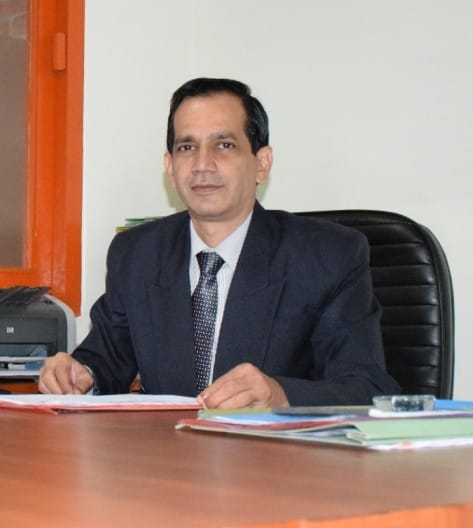
Gourav Sriwastva

Gourav Sriwastva

Post Graduate Trainee

Institute of Dental Sciences, Bhubaneswar Siksha 'O' Anusandhan University, Odisha, India

Profile ID RP-002-7777 Joined 2024-06-28 5 articles
0Connections
8
Total Views
5
Total Publications
121
Publication Views

Articles(5)

Authors: Gourav Sriwastva, Swati Acharya, Pavithra M Bai, Nitu Gautam, Suchareeta Panda, Saibalini Pani

DOI: 10.18231/j.jco.2025.035

Volume9
Issue2
Pages252-257
Abstract

Introduction - For the successful correction of Class II malocclusion, the use of functional appliances such as FR II, TB, and Forsus FRD can be highly effective initially followed by a fixed appliance treatment later. This study has been done to analyze the impact of FR II, TB, and FRD on a class II malocclusion patient on skeletal, dentoalveolar, and soft tissue. Materials and Methods: The study included 60 patients aged between 12±0.85 and 14±0.91 years, divided into 3 groups of 20 patients. Group A, Group B, and Group C were treated with FR II, TB, and Forsus FRD respectively. All patients had class II malocclusion, cusp-to-cusp molar relationship, minimal or no crowding in mandible, overjet not less than 5mm, no previous orthodontic treatment etc. The patients were followed up regularly and their skeletal, dentoalveolar, and soft tissue changes were recorded, evaluated, and compared to determine which appliance resulted in these changes. Result: FR II shows forward mandibular growth and positive soft profile. TB shows mandibular growth in sagittal and vertical dimensions, correcting the overjet and reducing facial convexity. The group with Forsus FRD shows mandibular growth through continuous, low-force stimulation, aiding in the coordination of dental arches. Conclusion: FR II shows marked changes in the dentoalveolar relationship with a direct impact on soft tissue changes, TB shows significant skeletal and dentoalveolar changes with a positive effect on soft tissues, Forsus FRD group shows both skeletal and dentoalveolar changes but indirect and very minimal soft tissue changes. Keywords: Class II Malocclusion, Fixed Functional Appliance, Forsus FRD, Frankel Appliance II, Removable Functional Appliance, Twin Block.
Authors: Dr. Pritam Mohanty, Dr. Nitu Gautam, Dr. Baratam Srinivas, Dr. Gourav Sriwastva, Dr. Bhabani Shankar Biswal, Dr. Subha Soumya Dany

DOI: 10.48047/AFJBS.6.14.2024.11696-11700

Volume6
Issue14
Pages11696-700
Abstract

ABSTRACT Aim: This study investigated the impact of orthodontic treatment on sleep quality in patients with malocclusion. Methodology: Utilizing a prospective cohort design, we assessed changes in sleep patterns and quality before and after treatment in 100 patients with various types of malocclusion. Sleep quality was measured using the Pittsburgh Sleep Quality Index (PSQI), while sleep duration and efficiency were monitored through sleep diaries and actigraphy. Result: Results indicated significant improvements in PSQI scores, sleep duration, and sleep efficiency over six months and one year. Patients with Class II malocclusion and those using clear aligners experienced particularly favorable outcomes. Conclusion: The study suggests that orthodontic treatment positively impacts sleep quality, though limitations such as the absence of a control group and reliance on self-reported measures must be considered.

Assessment of Knowledge and Need for Further Education Related to Implant Dentistry in General Dental Practitioners of Palamu Area, Jharkhand 2025

Authors: Dr. Akhilesh Tomar , Dr. Ayusha Kumari , Dr. Rajesh. H , Dr. Reya Shree , Dr. Sonali Kumari , Dr. Gourav Sriwastva

Volume14
Issue32
Pages1561-67
Abstract

Dental implant is a device that is installed into the jaw bone to retain prosthesis. There are no such surveys available regarding implant which is specifically conducted among general dental practitioners who are practicing in Palamu region of Jharkhand which is majorly a rural area. A cross sectional study was carried out among 71 general dental practionners of Palamu region of Jharkhand. A questionnaire set was framed with a total 23 questions. The results are made by gathering all the responses marked by the participating dentists and summarizing them in 3 same sections in which all the questions were framed. In the first section, the first 9 questions of the survey are based on basic knowledge of implant, in which on an average 55 out of 71 (77.47%) dentists had basic knowledge of implant. In the second section, 8 questions were based on clinical knowledge of implant, in which on an average 28 outof 71 (39.44%) had clinical knowledge of implant. In the third section, 6 questions are based on advances and implant education. On an average 33.80% of general dental practitioners have knowledge of basic surgical procedures like incision, type off lap, type of incision and about 81.70% of general dental practitioners don’t knowabout the advanced surgical procedures like sinus lift surgery, type of graft, GBR, GTR membrane. 80.28% of general dentists does not practice implant in their regular practice and about 84.51% finds implant placement to be difficult. The general dental practitioner should have adequate knowledge, skill and training which can be achieved by employing proper training and education to them.

Authors: Dr Akhilesh Tomar, Dr. Gourav Sriwastva, Dr Rajesh H., Dr. Prachi Ranjan, Dr. Mobarak Ansari, Dr. Saquib Zaman

DOI: 10.53555/ccstkf73

Volume29
Issue1
Pages833-840
Abstract

Aim: The aim of this study to compare and evaluate the healing after using N-butyl cyanoacrylate (tissue adhesive) or silk suture on periodontal flap closure. Material and methods: The randomized clinical trial was conducted in Department of Periodontics at Vananchal Dental College and Hospital, Garhwa, Jharkhand, India from January 2021 to January 2022. 50 healthy patients who fulfilled the inclusion and exclusion criteria and were included in this study. Plaque Index (PI), Gingival Index (GI), Wound healing Index (WHI), Histological Assessment (HA)all the study parameters were included in the present study. Results: At baseline postoperative in the suture sites, the mean plaque score was 0.736±0.165 which was reduced to 0.741±0.0997at a 42-day interval. In the cyanoacrylate sites, the mean plaque score at the baseline recall visit was 0.767±0.1697 and at the 42-day interval, it was 0.738±0.094. The mean gingival index in the suture sites at the baseline and42 days interval was 10.688±0.0745 Vs 0.675±0.087 respectively. In the cyanoacrylate sites, it was 0.6785±0.0744 at the baseline day and 0.675±0.069 at the 42 days follow-up. Wound Healing index score observed at cyanoacrylate sites was also lesser as compared to suture sites with statistical significance at 7th day indicating that wound healing was better when flaps were closed with cyanoacrylate as compared to silk sutures. There was no statistical significance observed between the epithelium of cyanoacrylate and suture sites on 7th and 42nd day. Inflammatory cells at cyanoacrylate sites were lesser as compared to suture sites with statistical significance on the 7th day. Vascularity at cyanoacrylate sites was lesser as compared to suture sites with statistical significance on the 7th day. Conclusion:The closure of periodontal flaps with cyanoacrylate results in better initial post- operative healing as compared to closure with silk suture and that this method of closure can be advocated in a routine surgical periodontal practice Keywords: Cyanoacrylates, Flap surgery, Silk sutures, Tissue adhesives

Authors: Pritam Mohanty, Gourav Sriwastva, Bikash Ranjan Bindhani, Payal Jyoti Dash, Soumya Ranjan Padhi, Debapreeti Mohanty, Bhabani Shankar Biswal

DOI: 10.4238/q4hz8c09

Volume25
Issue11
Pages1-6
Abstract

Background: our-dimensional nasoalveolar molding (4D NAM) appliances fabricated using thermo-responsive TA-28 (Graphy Inc., Seoul, South Korea) resins enable continuous and controlled force delivery. However, concerns regarding intraoral hypersensitivity in infants remain inadequately explored. Objective: To evaluate intraoral clinical signs of hypersensitivity associated with 4D NAM appliances in infants with cleft lip and palate. Methods: A prospective observational study was conducted on 17 infants undergoing 4D NAM therapy. Appliances fabricated using Graphy TA28 were assessed for hypersensitivity using clinical indicators including blanching, erythema, edema, ulceration, and behavioural responses. Evaluations were performed at every 10-day intervals coinciding with sequential tray changes. Results: No clinical signs of hypersensitivity, including blanching, erythema, edema, or ulceration, were observed at any evaluation point. However, persistent crying was not observed following insertion of subsequent appliances at 10-day intervals, indicating rapid adaptation to the therapy. Feeding tolerance remained satisfactory, shows positive suckling reflex during feeding and all infants accepted the appliances well without interruption of therapy or any adverse clinical events. Conclusion: The 4D NAM appliances exhibited excellent intraoral biocompatibility, with no evidence of hypersensitivity reactions, supporting their safe clinical use in infants. Although mild transient behavioural discomfort was observed following initial appliance insertion, infants adapted rapidly, and subsequent appliances were well tolerated. These findings suggest that thermo-responsive shape-memory resin is a clinically safe and acceptable material for presurgical infant orthopaedics. As these observations are based on preliminary data, further investigations involving larger cohorts and extended follow-up periods are necessary to validate the long-term safety and clinical performance of this novel material.

No matching articles

Try another word from the title, author or DOI.

Brief Bio

No bio added yet.

Affiliations

Nothing added yet.

Education

Nothing added yet.

Honors & Awards

Nothing added yet.

Society Memberships

Nothing added yet.

Expertise

Nothing added yet.

Specialty

Nothing added yet.

Other Online Pages

Scholars in the same field

RP
Rakesh Pandit
0 publications
NA
Nirali Alaiya
0 publications
YO
Yimkumna Ochi
0 publications
SK
Shiva Kumar
0 publications
TJ
Tintu Jose
0 publications
CR
Dr Chiranth R
0 publications
Dr Sameer Dileep Joshi
LNBCIEM Satara Maharashtra
0 publications
UG
UMER GULL KHAN
0 publications

Following

Nobody here yet.

Followers

Nobody here yet.

5 Publications

Assessment of Knowledge and Need for Further Education Related to Implant Dentistry in General Dental Practitioners of Palamu Area, Jharkhand

Authors: Dr. Akhilesh Tomar, Dr. Ayusha Kumari, Dr. Rajesh. H, Dr. Reya Shree, Dr. Sonali Kumari, Dr. Gourav Sriwastva

Published in 2025

0 Contributions

Nothing added yet.

Filter