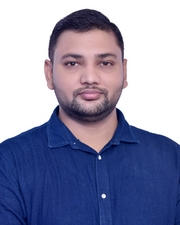
Suyash Pratap Singh

Suyash Pratap Singh

Assistant Professor

Institute of Dental Sciences Bareilly

Profile ID RP-002-5375 Joined 2024-01-17 9 articles
0Connections
13
Total Views
9
Total Publications
227
Publication Views

About me

Dr. Suyash Pratap Singh, BDS, MDS (Conservative Dentistry & Endodontics), is an Assistant Professor at the Institute of Dental Sciences, Bareilly International University, and Chief Endodontist at The Dental Home, Bareilly. A UK and Indian Design Patent holder for specialized endodontic instruments, he has published extensively in international peer-reviewed journals and co-authored \"Recent Advances in Dental Materials.\" His research focuses on CBCT-Guided Endodontics, Vital Pulp Therapy, Bioceramics, Endodontic File Standardization, and AI in Dentistry.

Articles(9)

Authors: Suyash Pratap Singh, Nirma Bharati

DOI: 10.14293/p2199-8442.1.sop-.pn34pg.v1

Volume1
Issue1
Pages1
Abstract

There has been a dramatic rise in the presence and relevance of AI in a wide variety of tasks and applications in dentistry, especially endodontics, and it has been called the "fourth industrial revolution" because it uses computer technology to replicate human intelligence.Artificial intelligence has been proved to achieve the same levels of efficiency, accuracy, and precision as human medical practitioners, but in less time and at a lower cost. Clinical uses of artificial intelligence in endodontics may help with diagnoses of periapical pathosis, root fractures, working length, morphology identification, and disease prediction.Prior to broad use of AI in ordinary clinical practice, it is important to gather high-quality information to assess the performance of AI in terms of its reliability, applicability, legal and ethical issues, and cost-effectiveness.

Authors: Suyash Pratap Singh, Anish Kr Maity, Rahul Pandey, Nirma Bharati, Manoj Kumar Hans

DOI: 10.18231/j.ijce.2024.011

Volume9
Issue1
Pages49-52
Abstract

This case report presents the diagnosis, successful management, and healing of a large periapical lesion associated with the mandibular first molar teeth The patient's chief complaint was severe, intermittent pain in the lower right posterior region of the mouth, and radiographic examination revealed a substantial periapical radiolucency around the apices of the mandibular first molar. The treatment involved root canal therapy along with adjunctive procedures to promote healing of the periapical lesion. Follow-up radiographs demonstrated a significant reduction of the periapical lesion with complete resolution of symptoms.

Authors: Gautam Nandita, Kushwaha Anushtha, Singh Suyash, Singh Siddhant, Singh Sonal

DOI: 10.17352/2394-8418.000110

Volume9
Issue2
Pages012-016
Abstract

Background: Poor oral health among the elderly has been measured in terms of tooth loss, dental caries, high prevalence rates of periodontal disease, xerostomia, and oral precancer/cancer around the world. Aim: The study's goal is to see how posterior occluding pairs and the total number of natural teeth in the mouth affect everyday activity in the elderly. Materials and methods: It was cross-sectional research with 300 participants drawn from a physiotherapy hospital by convenience sampling. The participants were asked about their age, gender, cigarette usage, oral hygiene practices, regularity of use, type of materials utilized, quality of life dental health and other xerostomia symptoms. The oral influences on the daily performance index were used to measure the effects on daily performance. The number of NT and POPs was counted during a clinical evaluation. Results: The studied population's general average age was 63.81 4.50, with no statistically significant differences between men and women. Overall, the research sample had a mean number of NT of 24.76 7.21, with men having 25.90 6.29 and women having 23.32 8.03. Conclusion: The number of NT and POPs was discovered to be important determinants of daily performance among the geriatric population.

Authors: Suyash Pratap Singh, Sheetal Sharma

DOI: 10.64062/JPGMB.Vol1.Issue5.12

Volume-1
Issue5
Pages157-170
Abstract

Nanoparticles have become a game changer and the multifunctional system in delivery of drugs to be used in addressing the shortfalls of traditional therapeutic i.e. low solubility, systemic clearance and lack of targeting that tends to diminish effect and increase side effects. To date, preclinical animal models have shown that varying platforms of nanoparticles, including polymeric nanoparticles, liposomes, solid lipid nanoparticles, metallic nanoparticles, dendrimers, and quantum dots, have the potential to improve therapeutic outcome by determining the accumulation of drugs within the body, by controlling and prolonging their release, and by improving bioavailability as well as selective deposition in target tissues. These systems have demonstrated to have potential in a vast field of applications including oncology, neurodegenerative disorders, antimicrobial therapy and anti-inflammatory treatment. The safety and biocompatibility of polymeric and lipid-based nanoparticles are typically favorable, and with metallic nanoparticles, although these types of nanoparticles are multifunctional and have theranostic potential, there is a risk of accumulation or toxicity over time. The animal research has also emphasized the key role of particle size, surface functionalization and composition in determining pharmacokinetics, biodistribution and therapeutic efficacy. However, interspecies variability, large-scale synthesis that can be reproduced and reproducible, standard toxicity tests and optimization of targeting strategies are still critical barriers to clinical translation. Further research on biodegradable nanoparticle substitutes, long-term safety analysis, and comparative studies done systematically are necessary to ensure full utilization of the potential of nanoparticle-based drug delivery system and develop it to a safe, effective, and clinically viable drug delivery system.

Authors: , Puja Chavan, Yash Rajendra Shaha, , Suyash Pratap Singh, , Supriya Makam, , Ashwini Komalan, , Arti Gachake, , Mrunal Dave, , Pratik Surana

DOI: 10.6026/973206300214625

Volume21
Issue12
Pages4625-4628
Abstract

The relatively low compressive strength of conventional glass ionomer cements limits their use in stress-bearing areas, necessitating evaluation of newer reinforced variant. Therefore, it is of interest to evaluate compressive strength of different types of glass ionomer cements (GIC): conventional GIC (Group A), Zirconomer (Group B) and Amalgomer CR (Group C). Each group consisted of 12 specimens formed in plastic straws with 4mm X 6mm dimension. Compressive strength was assessed using a universal testing machine at a crosshead speed of 1 mm/min. Result showed that Zirconomer exhibited the highest compressive strength, indicating its superior performance compared to the other materials.

Authors: Neel Doshi, Divyashree Prasad, Suyash Pratap Singh, Ilham Aliya, Aswiyaa Muhamed Ilyas, Sarita V Singh, Rubeena Naaz, Md Kafeel Ahmed

DOI: 10.6026/973206300223096

Volume22
Issue5
Pages3096-3100
Abstract

The ideal root-end filling material should provide an excellent apical seal, yet the sealing performance of newer bioceramic materials remains uncertain. Therefore, it is of interest to evaluate the sealing ability of four root-end filling materials on 70 extracted single-rooted human teeth prepared under standardized conditions. The specimens were randomly assigned to mineral trioxide aggregate, Biodentine, Bioceramic Putty and Bio-C Repair groups and sealing was assessed by dye penetration under a stereomicroscope. Statistical analysis showed that the newer bioceramic materials sealed better than conventional MTA, with Bioceramic Putty showing the best performance. Thus, we support the clinical potential of bioceramic putty as a promising root-end filling material.

Authors: S. Bathla, S. P. Singh, D. Das, A. Banik, N. Khan, S. Duary, S. Kumar, R. Kashwani

DOI: 10.36377/et-0210

Volume24
Issue3
Pages464-473
Abstract

AIM. Enterococcus faecalis is a gram-positive facultative anaerobe commonly known as the primary pathogen implicated in persistent and secondary endodontic infections, due to its exceptional capacity to invade dentinal tubules, form resistant biofilms and survive in nutritionally adverse alkaline environments. Although effective, conventional chemical irrigants like sodium hypochlorite and chlorhexidine have been found to cause cytotoxicity and other unwanted effects. Sea buckthorn (Hippophae rhamnoides L.) is a medicinal plant that has shown promise as a natural antimicrobial agent due to its richness in flavonoids, polyphenols, carotenoids and unsaturated fatty acids. The purpose of this review is to summarize and examine existing evidence on the antimicrobial efficacy, mechanisms of action, and clinical potential of sea buckthorn against E. faecalis in the context of root canal infections. MATERIALS AND METHODS. The literature review was conducted thoroughly by using the PubMed, Embase and Cochrane Library databases. The review incorporated studies in English that involved phytochemical, microbiological, in vitro, and in vivo studies that were relevant to the study involving the use of sea buckthornderived agents when conducting dentistry and endodontics research. RESULTS. Extracts of sea buckthorn exhibit broad-spectrum antimicrobial activity that can be ascribed to bioactive compounds, such as quercetin, kaempferol, isorhamnetin, palmitoleic acid and ascorbic acid. Disruption of bacterial cell membranes, inhibition of biofilm formation, suppression of acid production, and modulation of host inflammatory responses are all reported antibacterial mechanisms. Aqueous and hydroalcoholic leaf extracts have demonstrated growth-inhibitory action against E. faecalis, whilst, pulp oilbased preparations have demonstrated anti-biofilm activity against a variety of oral pathogens. Comparative studies indicate similar, and in certain cases better, efficacy compared with chlorhexidine, and much better biocompatibility.  CONCLUSIONS. Sea buckthorn is a biocompatible, multifunctional adjunct that can be used as an endodontic irrigant or intracanal medicament. Nonetheless, before it can be adopted into routine clinical practice, standardization of extraction techniques, optimal concentrations, and optimally designed randomized clinical trials are required.

No matching articles

Try another word from the title, author or DOI.

Brief Bio

Dr. Suyash Pratap Singh, BDS, MDS (Conservative Dentistry & Endodontics), is an Assistant Professor at the Institute of Dental Sciences, Bareilly International University, and Chief Endodontist at The Dental Home, Bareilly. A UK and Indian Design Patent holder for specialized endodontic instruments, he has published extensively in international peer-reviewed journals and co-authored \"Recent Advances in Dental Materials.\" His research focuses on CBCT-Guided Endodontics, Vital Pulp Therapy, Bioceramics, Endodontic File Standardization, and AI in Dentistry.

Affiliations

Nothing added yet.

Education

Nothing added yet.

Honors & Awards

Nothing added yet.

Society Memberships

Nothing added yet.

Expertise

Nothing added yet.

Specialty

Nothing added yet.

Other Online Pages

Scholars in the same field

BG
Bhupendra Gupta
0 publications
NK
Nithis Kumar S
0 publications
NB
Nirjan Biswas
0 publications
PS
parimala subramani
0 publications
UG
UMER GULL KHAN
0 publications
SS
Satyaprakash Suman
0 publications
AR
Ananta Raj Sharma
0 publications
KK
KARAMVIR KARAMVIR
0 publications
NT
Dr Nandan T M
0 publications
AK
Abhinav K P
0 publications

Following

Nobody here yet.

Followers

Nobody here yet.

9 Publications

0 Contributions

Nothing added yet.

Filter